
Building Automation
Energy Management & Building Automation Case Study: EMS, ENMS and BMS Across Abu Dhabi Landmarks
By Arch. Dany Dandachi, ALMAFOR, Abu Dhabi, United Arab Emirates
Published · updated
In a large commercial building, energy is spent long before anyone notices it. A chiller runs harder than it needs to, a floor draws more than its neighbours, a meter drifts, and the first evidence is a utility bill that no one can fully explain. An energy management system exists to close that gap, to turn power, water and plant behaviour into data an operator can actually see and act on. This case study describes how ALMAFOR designed, built and maintained energy management, energy network monitoring and building automation systems across Abu Dhabi landmarks, and what makes this kind of industrial automation work in occupied, mission-critical buildings.
It is written for facility owners, developers, FM providers, and organisations comparing industrial automation companies in Abu Dhabi and Dubai for energy and building automation.
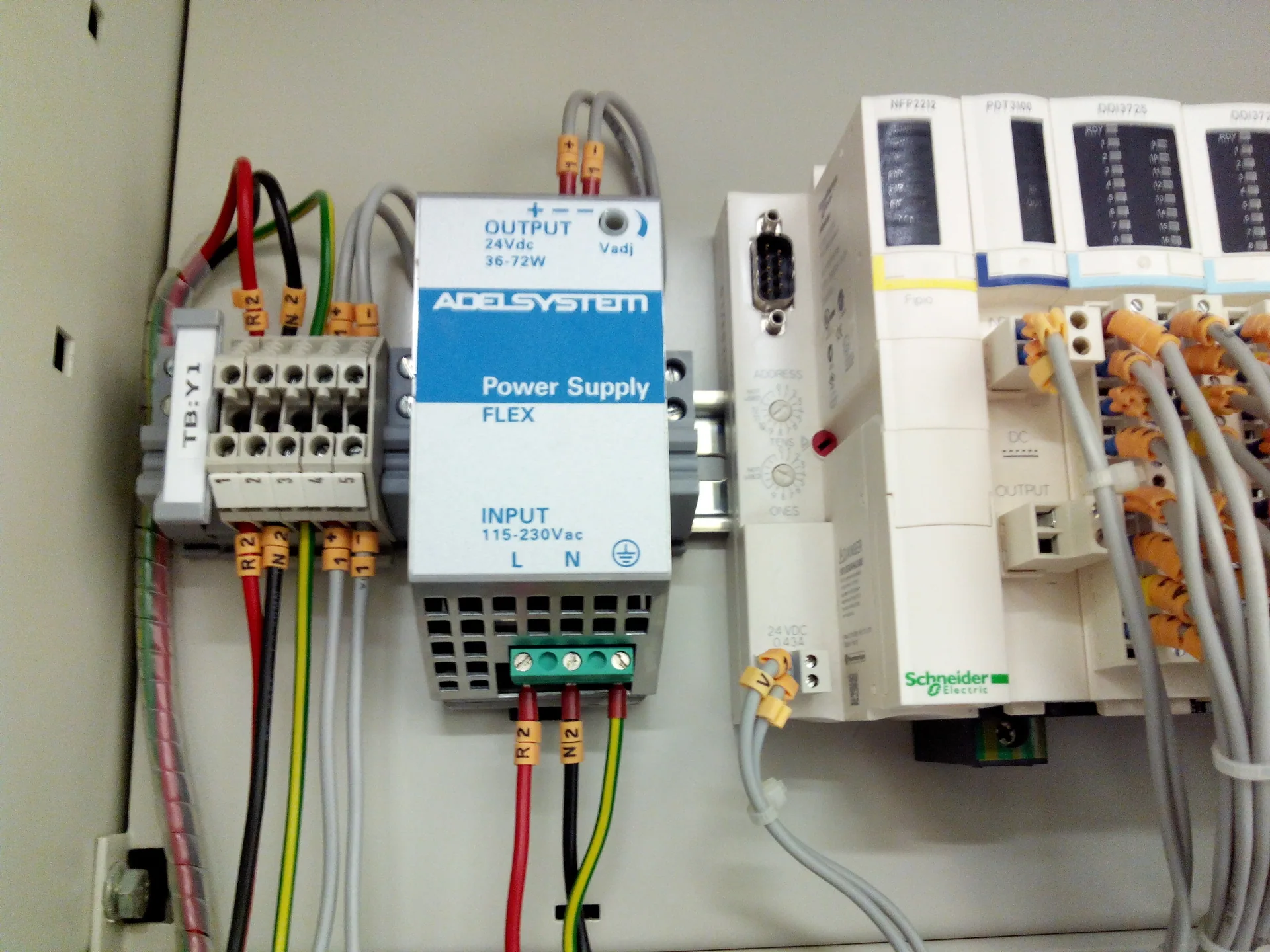
A Schneider Electric PLC and control panel from ALMAFOR's energy management scope at the Al Bahr Towers (ADIC / Bank El Hilal HQ), Abu Dhabi.
Project reference at a glance
Flagship project: Energy Management System, Energy Network Monitoring System & Automated Metering, Al Bahr Towers.
Client / End user: Abu Dhabi Investment Council and Bank El Hilal Head Quarters (ICHQ).
Scope: Design, manufacture, supply and commissioning of EMS, ENMS and AMS, double-redundant fibre-optic ring, three redundant SQL servers, forty hot-standby PLCs, six workstations, eight local HMIs, forty four PDUs, roughly 700 ION/PM750/PM1200 power meters, MV/HV protection relay integration, around 50,000 tags; followed by multi-year corrective and preventive maintenance.
ALMAFOR role: Designed, built and maintained the system, and main contractor for the later SCADA/PcVue upgrade.
EMS, ENMS and AMS: what the system actually does
Three related layers sit behind an energy management deployment, and it helps to keep them distinct:
- The Energy Management System (EMS) gathers consumption and power-quality data and turns it into usable information, trends, baselines, and reports that expose where energy actually goes.
- The Energy Network Monitoring System (ENMS) watches the electrical network itself, power meters and protection relays across the distribution system, so operators can see load, power quality and events in real time.
- The Automated Metering System (AMS) removes manual reads, giving consistent, timestamped data that the EMS and ENMS depend on.
At the Al Bahr Towers, ALMAFOR designed, manufactured, supplied and commissioned all three. The architecture was built for resilience appropriate to a landmark headquarters: a double-redundant fibre-optic ring, three redundant servers running SQL Server, around 50,000 tags, forty hot-standby PLCs, six workstations and eight local HMIs, forty four PDUs on Modbus, DNP and Modbus communication down to the field, roughly 700 ION, PM750 and PM1200 power meters, and integration with MV/HV protection relays. This is industrial-grade automation applied to a commercial building, the same discipline used in a substation, aimed at energy visibility instead of switching.
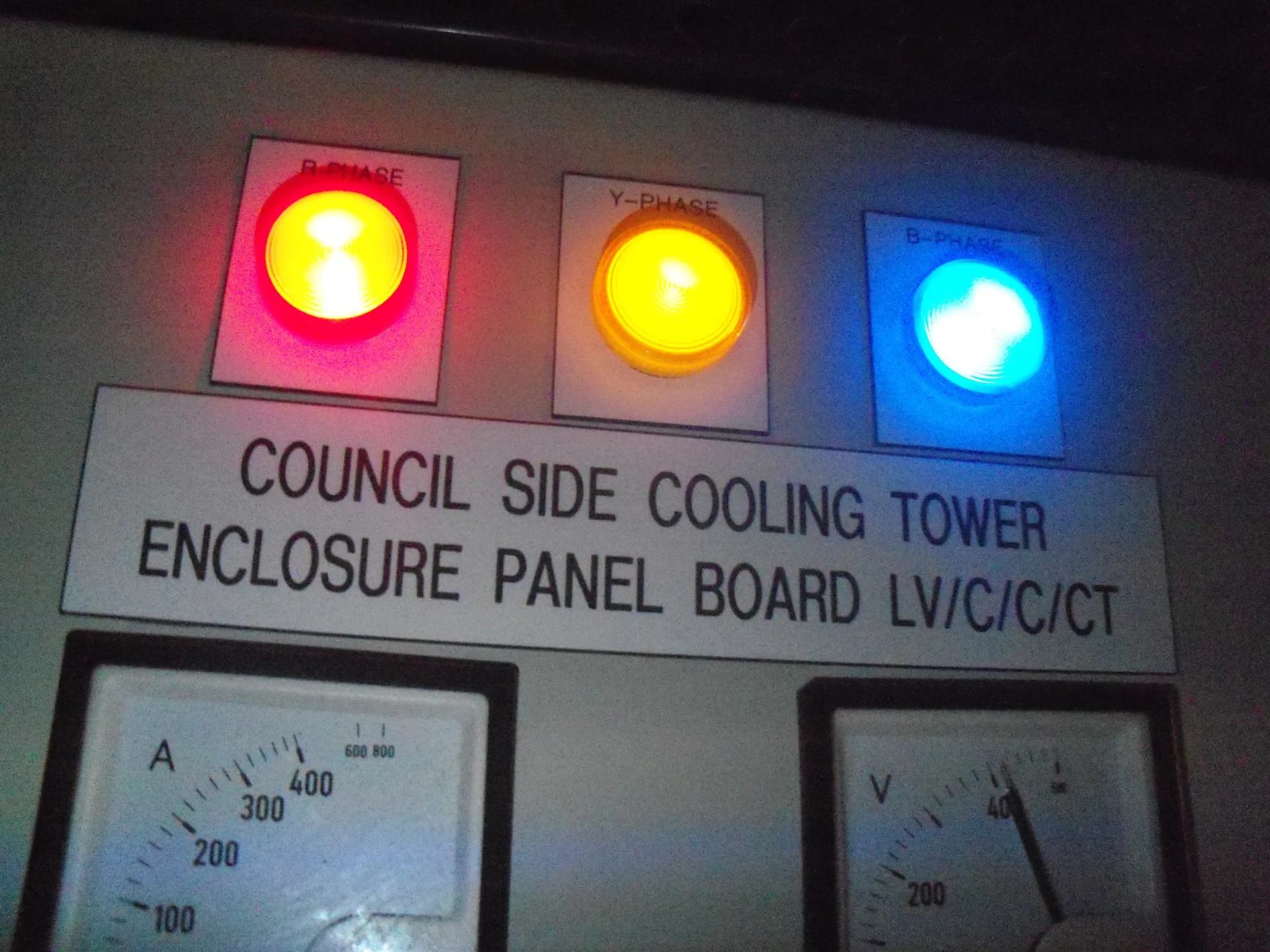
Energised phase indicators and metering on a switchboard integrated into the energy network monitoring system.
Why energy automation is really an integration problem
Buying meters is easy. Making thousands of energy and power points arrive reliably, consistently named, correctly timestamped, and mapped into a SCADA and reporting layer that people trust, that is the actual engineering. If tags are inconsistent or timestamps drift, the reports lie, and a system that lies gets ignored. ALMAFOR's work here is fundamentally an integration discipline: field devices, communications, servers and reporting engineered as one coherent system.
That is also why the Al Bahr Towers scope later included a SCADA upgrade from PCVue 9.0 to v16.0 as Main Contractor, keeping the platform current so the data layer stays supportable and secure over the building's life.
The same discipline across very different buildings
Energy and building automation is not one-size-fits-all. ALMAFOR has applied the same core discipline across very different buildings across Abu Dhabi and the UAE:
- BMS & Chiller Modification: MLC-MEA Learning Centre, ADNOC Al Shamkha (for Schlumberger Technical Services). Supply, installation, testing and commissioning of control and SCADA works and duct works, with multiple VFDs across a range of ratings driving chiller-side plant, building automation aimed squarely at cooling energy.
- Traditional Mosque, Ras Ghurab Island: a full BMS behind a heritage-style building, proving automation and traditional architecture are not in conflict.
- G+2 Office Building, Khalifa Industrial Zone-A: Estidama-compliant energy monitoring, a full BMS, and lighting control, automation delivered to meet Abu Dhabi's sustainability requirements from day one.
- Al Tala Board Manufacturing, Kizad: centralised energy and water metering and monitoring to Estidama requirements for an industrial facility.
- UAE Army Dubai Base: a process water treatment station with engineering design, supply, programming and commissioning of electrical and automation panels, PLC, HMI and SCADA, ALMAFOR's automation footprint extending into Dubai.
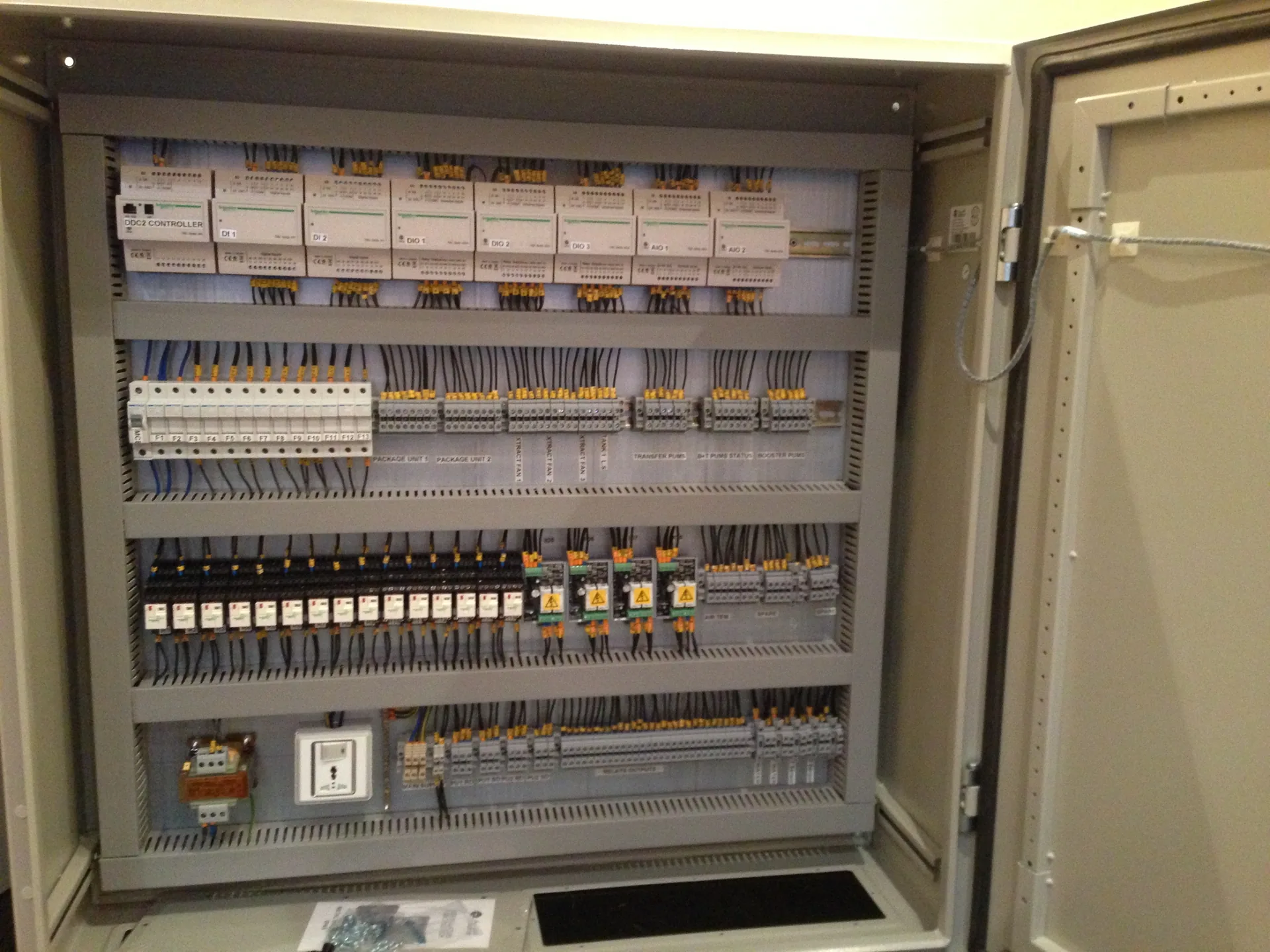
A BMS/DDC control panel from the Ras Ghurab Island mosque, dressed, labelled cabling behind a heritage-style building.
Estidama, sustainability and the business case
In Abu Dhabi, energy and building automation is not only an operational choice, it is increasingly a compliance one. Several of these projects were delivered specifically to Estidama requirements, where energy and water metering, BMS, and lighting control are part of how a building is permitted and rated. That aligns the operator's interest (lower running cost, fewer surprises) with the regulatory one.
But the honest business case is conditional. An energy management system does not save energy by existing; it saves energy when the data leads to better decisions, resequencing a chiller, catching a drifting meter, spotting a floor or tenant that draws more than it should, or scheduling maintenance before efficiency degrades. The value is in the actions the data enables, which is why reporting quality and operator usability matter as much as the meter count.
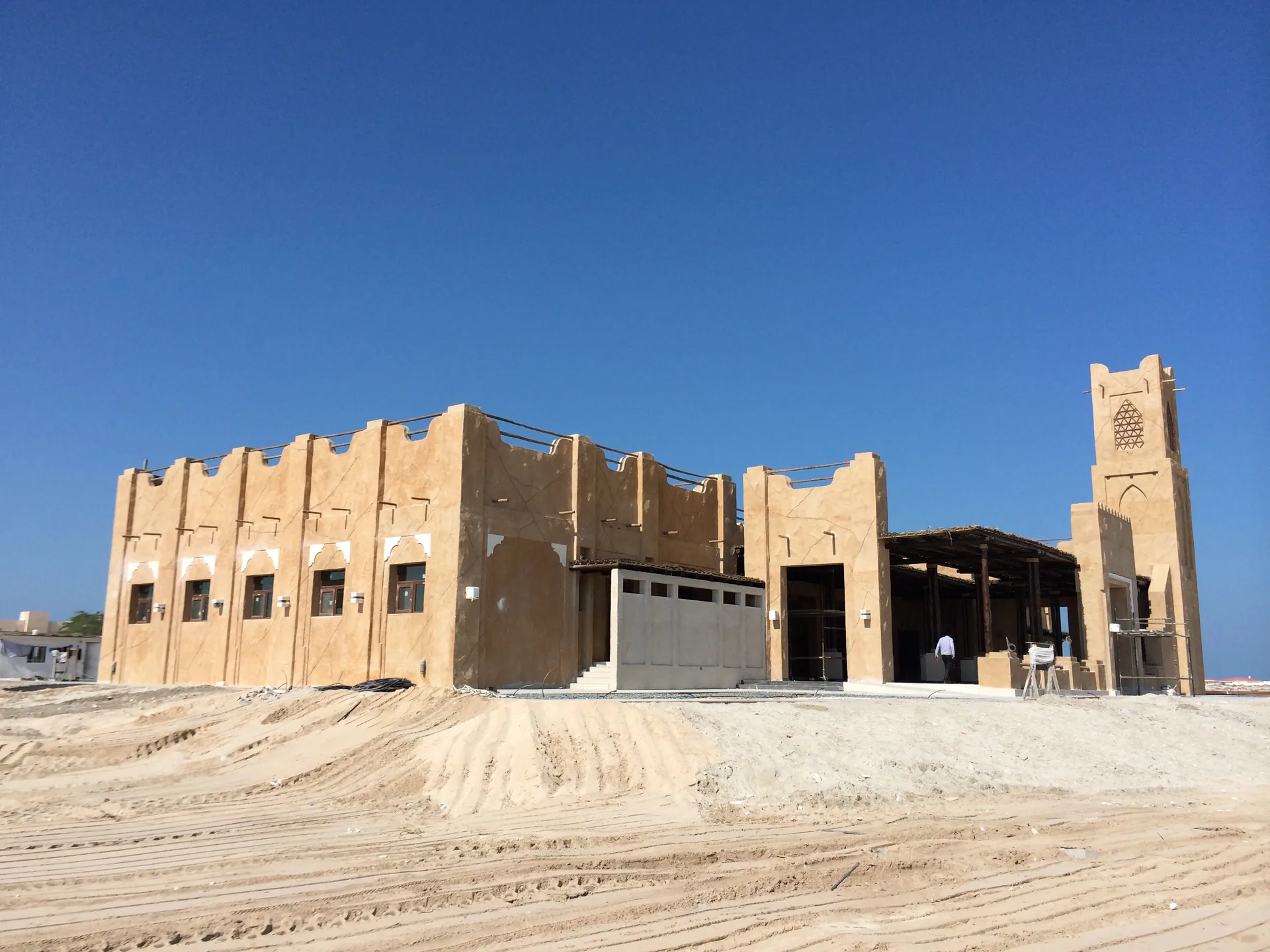
The Ras Ghurab Island mosque, a heritage-style landmark with a building management system integrated behind traditional architecture.
Why turnkey delivery changes the result
Because ALMAFOR designs, manufactures, supplies, programs, commissions and then maintains these systems, accountability stays in one place. The team that built the panels and wrote the PLC and SCADA logic is the team that supports it, so when a meter drifts or a report looks wrong years later, the knowledge to fix it still exists. For a landmark building, that continuity is often worth more than any single feature.
Trade-offs owners should weigh
A capable energy and building automation system is an investment in engineering, not just hardware. Redundancy, integration and long-term maintenance cost money up front and only pay back through disciplined operation. Owners should weigh the meter count and feature list against the quality of integration, the trustworthiness of the reporting, and whether there is a partner who will still understand the system in five years.
What this energy management case study proves
Across the Al Bahr Towers and these Abu Dhabi and UAE landmarks, the pattern is consistent: energy management, energy network monitoring and building automation succeed when they are engineered as integrated, well-maintained systems rather than assembled from parts. That is the discipline ALMAFOR brings as an industrial automation partner in Abu Dhabi and Dubai, turning power, water and plant behaviour into data owners can trust and act on.
We want to hear from you
Tell us about the system you need built, upgraded or kept running.