
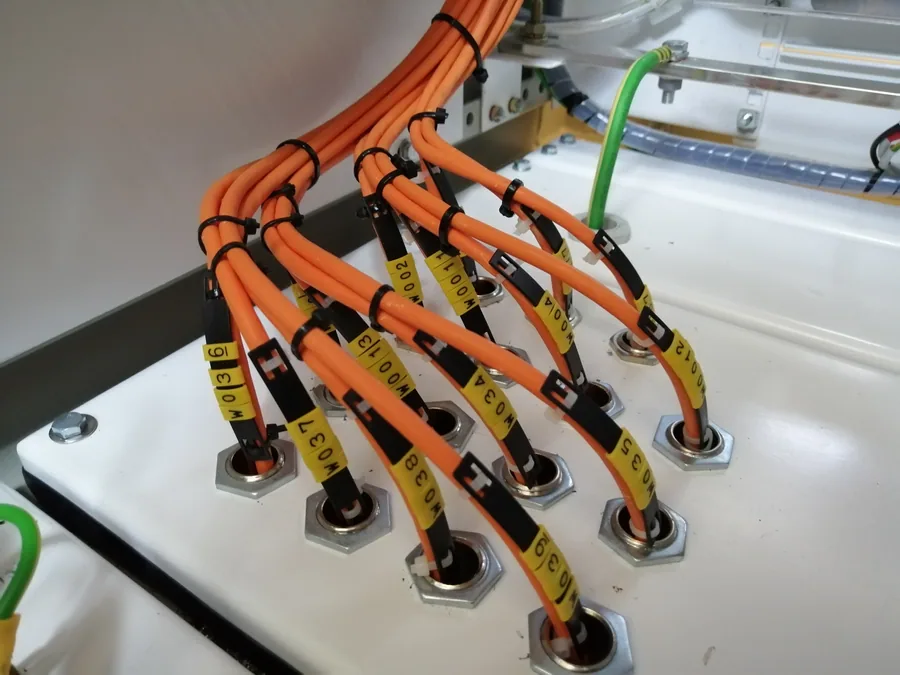
Upgrading and replacement of GE SCMS, TAQA Transmission
TAQA - Transmission
Date2022-01-16
CategoryAutomation, Panel Building
Services
Control and monitoring system replacement on grid stations that stay in service throughout, from 400kV down to 11kV.
What we do
Almafor has replaced substation control and monitoring systems across the Abu Dhabi transmission and distribution network since 2008, for TRANSCO, TAQA Distribution, Al Ain Distribution Company and AD Ports Group. Most of that work has been carried out as main contractor rather than as a specialist packaged under somebody else.
Almost none of it happens on a dead station. The plant has a transmission duty it has to keep meeting, so the automation is built around an outage plan rather than the other way round. That single constraint decides the sequence, the staging and usually the programme.
The trigger for this work is rarely a failure. It is unsupportability: the platform has passed end of life, spares come from the second hand market, nobody holds the configuration, or the station cannot speak to the systems the utility now runs. On TRANSCO project N-15223 the systems being retired were Alstom and GE equipment that had passed exactly that point.
Typical brief
Three situations account for most of the substation work that reaches us.
The station runs, but the vendor has ended support and the engineer who configured it has left. We survey what is actually installed, document it against the drawings, and stage the replacement bay by bay so the station never depends on equipment that has not yet been proven.
Local control works and the control centre is blind, or sees a subset that nobody trusts. This is gateway and protocol work: IEC 60870 5 101 and 104, IEC 61850 on newer bays, and the point mapping that keeps one signal meaning one thing on both sides of the link.
A utility replacing across a fleet rather than at one site. The engineering is rarely the constraint here. Outage windows are, which is why the survey and the outage plan matter more to the schedule than the equipment lead time.
Scope
Track record
Completed contracts with the client and the dates. Follow any card for the full detail.
TAQA - Transmission
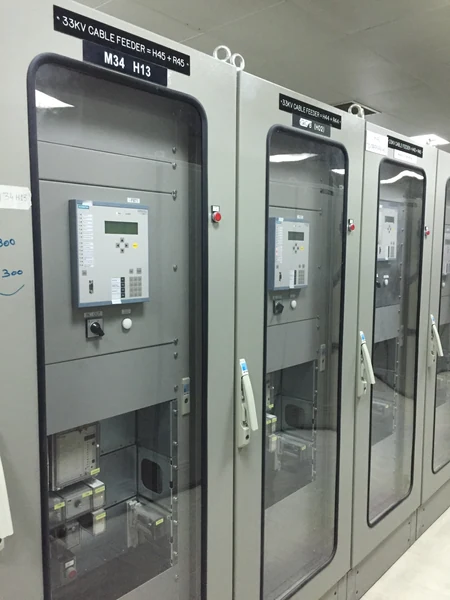
TAQA Transmission
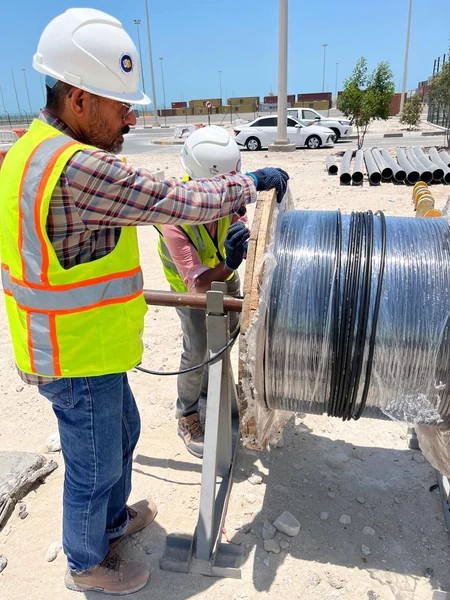
Platforms
On replacement work the platform is set by what your control centre already speaks, not by what we would prefer to supply. We are not tied to one vendor.
Method
On a station of any age the record and the copper have drifted apart. This is the week that saves the programme, and it is where the legacy relays, panel logic, auxiliary supplies and cable routes get established.
Built backwards from the duty the station has to keep meeting. Every task is arranged around that constraint, bay by bay, rather than around the convenience of the works programme.
Panels built and the system configured and proven in our Mussafah workshop, with your engineers present, before anything ships to site.
Each new bay controller installed, configured and point to point tested against the existing interlocking before anything is cut over. The hardwired interlocking stays live throughout.
Landed inside the same contract. A station automated locally but invisible to the dispatch centre has moved the problem rather than solved it.
Operators and engineers trained separately because they need different things, with as built drawings, configuration backups and a named owner.
Common questions
Not without any outage, but almost always without dropping supply. The work is sequenced bay by bay against an outage plan built around the station's transmission duty. Each new bay controller is installed, configured and point to point tested against the existing interlocking before anything is cut over, and the hardwired interlocking is kept live through the change so safety never depends on the new system being healthy.
From 400kV down to 11kV. On TRANSCO project N-15223 we replaced the control and monitoring system across six grid stations spanning that whole range: a 400kV to 220kV station, a 400kV station, a 220kV to 33kV station and three stations at 132kV to 11kV.
It is the right default for a new or fully replaced station because it gives interoperability and a structured data model. It is not automatically right for a brownfield retrofit, where DNP3, IEC 101 or Modbus may already be what the control centre speaks and what the installed base supports. The right protocol is the one that fits the installed equipment and the expansion plan, not the newest one.
Usually not, and we have deliberately retained it through an upgrade. At Al Khazna the upper and lower ring system was upgraded at 33kV and 11kV with the hardwired interlocking kept live throughout, because during a cutover the new system is exactly the thing that cannot be trusted yet. A station whose safety depends on the equipment being installed has no safe way to install it.
Almost always. The systems we retired on TRANSCO project N-15223 were Alstom and GE equipment. The work starts with a survey of the existing configuration, the protocols it exposes and the interlocking it currently depends on.
A single station can run to a contract year. Multi station programmes run for years, because the schedule is set by how many bays the utility will release and when. The two TRANSCO SCMS contracts ran from 2017 to 2022 and to 2023.
Related
Tell us about the system you need built, upgraded or kept running.