
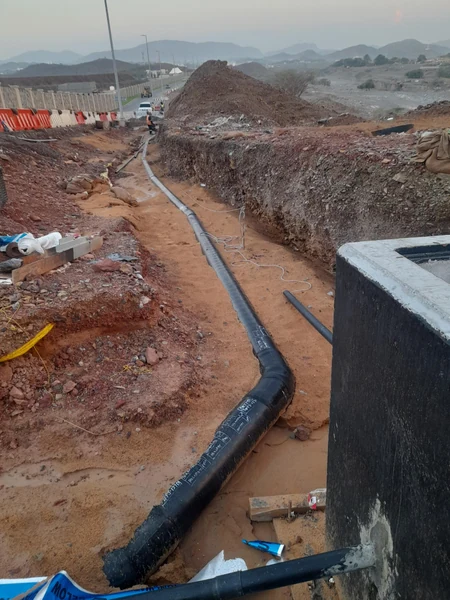
SCADA System For Potable Water Pipeline Jabal Mibrih Road
Ministry of Energy & Infrastructure
Date2023-10-16
CategoryAutomation, MEP, Civil Engineering
Guide
Anyone can print the words system integrator on a profile. These are the things that actually distinguish one, and the ways to check.
Definition
A SCADA system integrator is accountable for the whole chain between a piece of plant and the screen an operator watches. That means the instrument, the controller, the panel it sits in, the network that carries the data, the SCADA application, and the proof that every point on the screen corresponds to the thing it claims to represent.
The reason the definition matters commercially is that each link in that chain can be bought separately, and often is. When it is, nobody owns the interfaces. The integrator's real product is a single point of accountability at site acceptance testing.
Almafor works as an integrator on power, water and irrigation networks in the UAE, on both new systems and replacements of systems somebody else installed. The pages below list the contracts, the clients and the years.
Capability
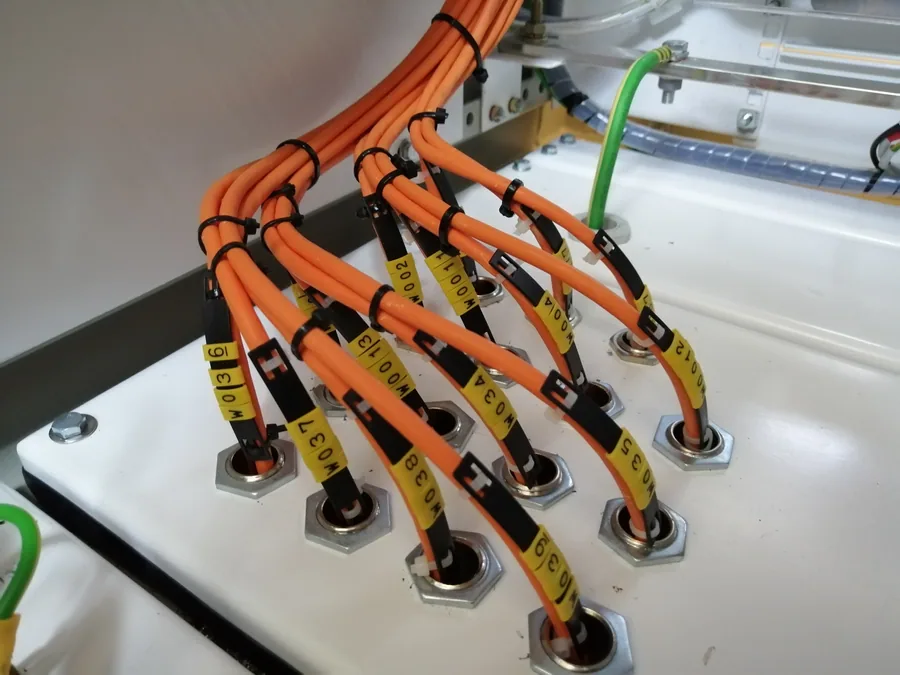
Transmitters, flow meters, level and pressure instruments, valve actuators, protection relays and metering. Selection, loop design, installation and loop checking. A SCADA screen is only as honest as the instrument feeding it.
PLCs and RTUs, bay control units, and the logic that runs when the link to the control room is down. Remote sites in the UAE lose communications, so what the controller does on its own matters more than what the SCADA does when everything is healthy.
Fibre optic and copper networks, radio and cellular links, industrial switches and protocol conversion. On one potable water pipeline contract this meant laying seventeen kilometres of fibre along the route before any of the automation could be proved.
The application itself: graphics, alarms, historian, trends, reports and user access. Plus migration work when a platform reaches end of support, which is a large share of the integration market in the UAE right now.
Verification
Track record
Each of these required integrating with equipment and protocols chosen by somebody else.
Ministry of Energy & Infrastructure
TAQA - Transmission
ABU DHABI INVESMENT COUNCIL
Department of Municipalities & Transport, Abu Dhabi (DMT)
Platforms
An integrator tied to a single platform will recommend that platform whatever the problem is. These are the ones we hold approvals or delivered work on.
Method
Before any graphics work, every signal is listed with its source, its address, its scaling and its alarm limits. This document is what site acceptance is tested against, so it is agreed early rather than reconstructed at the end.
The application is driven from simulated inputs in the workshop so that alarms, interlocks and reports can be exercised without waiting for plant availability.
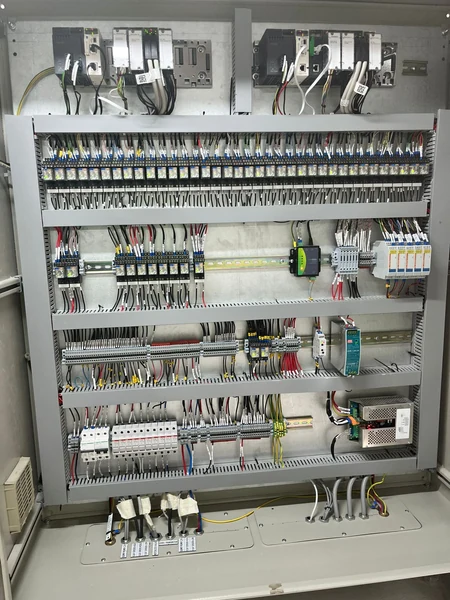
Panels and application are tested together, with the client present, before anything ships.
Every signal is proved from the field device to the screen. This is slow and there is no substitute for it. It is also the stage most often compressed when a programme slips.
Formal testing against the approved schedule, then as built documentation, operator training and the defect liability period.
Common questions
A software company configures the application. An integrator is accountable for the application and everything it depends on, including the instruments, the controllers, the panels and the network. If a value on a screen is wrong, a software company will show you that the tag is reading what the controller sent. An integrator has to find out why the controller sent it.
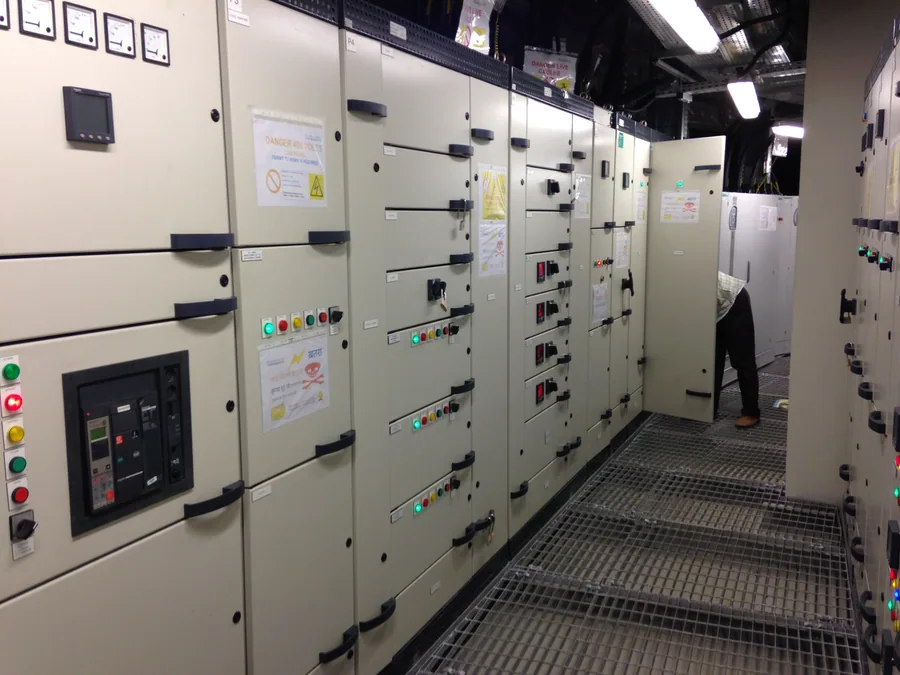
Yes, and a large part of our work is exactly that. The first step is always a survey of what is really installed and how it is configured, because undocumented logic and as built drawings that no longer match the plant are the normal condition rather than the exception. We have taken over and upgraded GE based substation control systems for TAQA Transmission on that basis.
Usually the one your operators already know and your asset owner already supports, unless it has reached end of support or cannot do something the new scope requires. Platform migration is expensive and disruptive, so it is worth doing for a real reason rather than a version number. We work across PcVue, GE Vernova Proficy, Schneider Electric and Hitachi Energy MicroSCADA, so the recommendation is not fixed in advance.
Yes. Controller and drive replacement is a separate discipline from SCADA work and often arrives first, because obsolescence usually bites at the controller before it bites at the application. That has included medium voltage drive and motor replacement on a 6.6kV pump station.
By designing the controller to run the process correctly on its own and to buffer data until the link returns, rather than assuming the link is there. Remote irrigation and pipeline sites in the UAE lose communications regularly, so autonomous behaviour during a comms outage is part of the specification rather than an edge case.
Related
Tell us about the system you need built, upgraded or kept running.