
SCADA System For Potable Water Pipeline Jabal Mibrih Road
Ministry of Energy & Infrastructure
Date2023-10-16
CategoryAutomation, MEP, Civil Engineering
Services
The foundations, trenches, ducts, chambers and control room works that a control system needs before any of it can be commissioned.
What we do
Almafor carries out the electrical, control and instrumentation installation on its own projects, together with the civil work that goes with it: foundations, trenching, ducts and chambers, cable routing, builder's work and control room fit out.
This is the scope most often handed to a separate contractor, and it is the most common cause of delay we see. A well engineered system in a room with no cable route to it is not a system. When the room, the network and the control equipment are split across three contracts, every intermittent fault becomes a meeting rather than a repair.
Keeping it in one contract removes the interface argument. On the Khalifa Port substations the site survey, detailed design, shop drawings, civil works and the IT and fibre network sat alongside the hardware and software replacement inside a single contract, and on the Jabal Mibrih potable water pipeline the seventeen kilometres of fibre and the SCADA that runs on it were one job rather than two.
Typical brief
Three kinds of work, and they tend to arrive together.
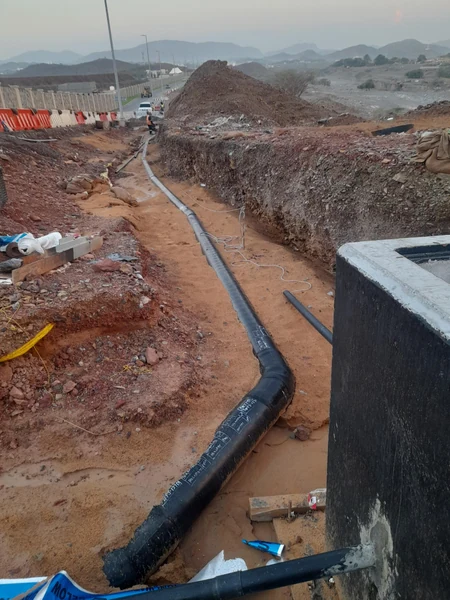
Route survey, trenching, ducts, chambers, backfill and reinstatement, then the pulling and termination. On a long asset this is most of the programme. Seventeen kilometres of fibre is a civil project with a cable in it, not a cabling project.
Plinths and foundations for panels, generators, kiosks and pump sets, along with the builder's work openings, penetrations and sealing that the electrical installation depends on.
Control room fit out, containment, earthing, small power and lighting, and the coordination with the base build that decides whether the equipment can actually be installed where the drawing shows it.
Scope
Track record
Completed contracts with the client and the dates. Follow any card for the full detail.
Ministry of Energy & Infrastructure
TAQA distribution
Platforms
Utility work follows the client's own standards and permitting process, which on road crossings and duct banks is usually the item that decides the programme.
Method
Existing services, ground conditions, crossings and the permits each one will need. On a long route this decides both the programme and most of the cost.
Issued for approval with the builder's work requirements identified, so that penetrations and plinths are built once rather than cut afterwards.
Excavation, ducts, chambers and foundations, sequenced so the electrical installation is never waiting on concrete.
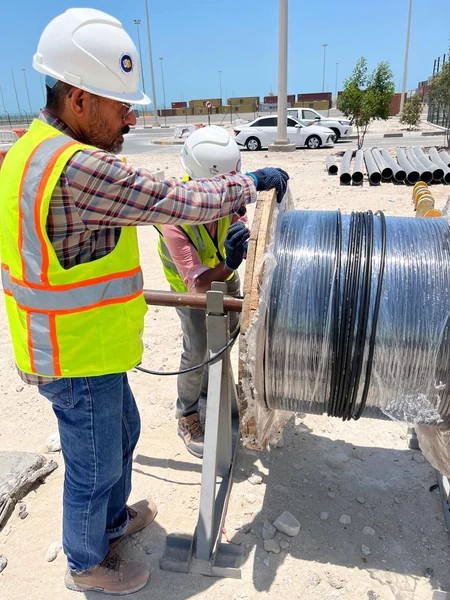
Containment, cabling, panels and instruments, with the fibre pulled, spliced and OTDR tested along the route.
Backfill, surfacing and handover of the route to the authority, with the records each crossing requires.
As built drawings, test results and inspection records issued together with the control system documentation, because they describe one installation.
Common questions
Because when they are split, every intermittent fault becomes a meeting. A well engineered system in a room with no cable route to it is not a system. Keeping the room, the network and the equipment under one contractor removes the interface argument that causes most of the delay on these jobs.
Yes, including the permitting. On the Jabal Mibrih Road potable water pipeline the scope covered seventeen kilometres of fibre optic cable supplied, laid and terminated, which in practice means route survey, trenching, ducts, chambers, crossings and reinstatement before any cable is pulled.
Regularly, and it is the harder version. At Khalifa Port the civil and fibre works ran across three primary substations serving a port that does not stop, which means the sequence is dictated by what can be taken out of service and when.
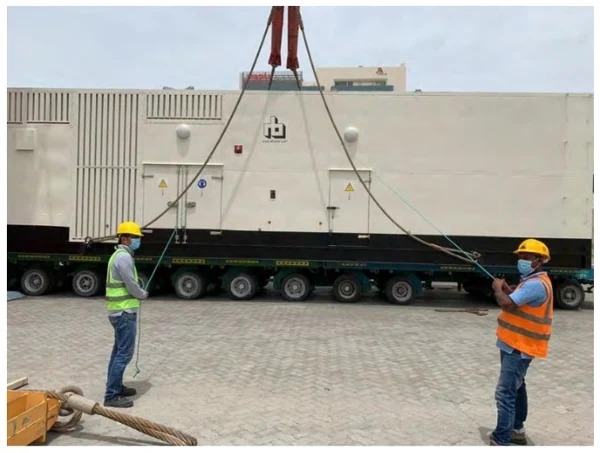
Yes. At Al Jazeera Hospital we delivered a containerised diesel generator rated 3000kVA at 11kV as main contractor, integrated into the existing 11kV switching station rather than installed alongside it, with a 500kVA station auxiliary set and the civil works for both.
It is not what we are set up for. Our civil and MEP capability exists to remove the interfaces on our own control projects, and that is where it is worth having. For standalone building works you would be better served by a general contractor.
Yes, and builder's work drawings with them. Identifying penetrations and plinths at the drawing stage is the difference between concrete poured once and concrete cut afterwards.
Related
Tell us about the system you need built, upgraded or kept running.