
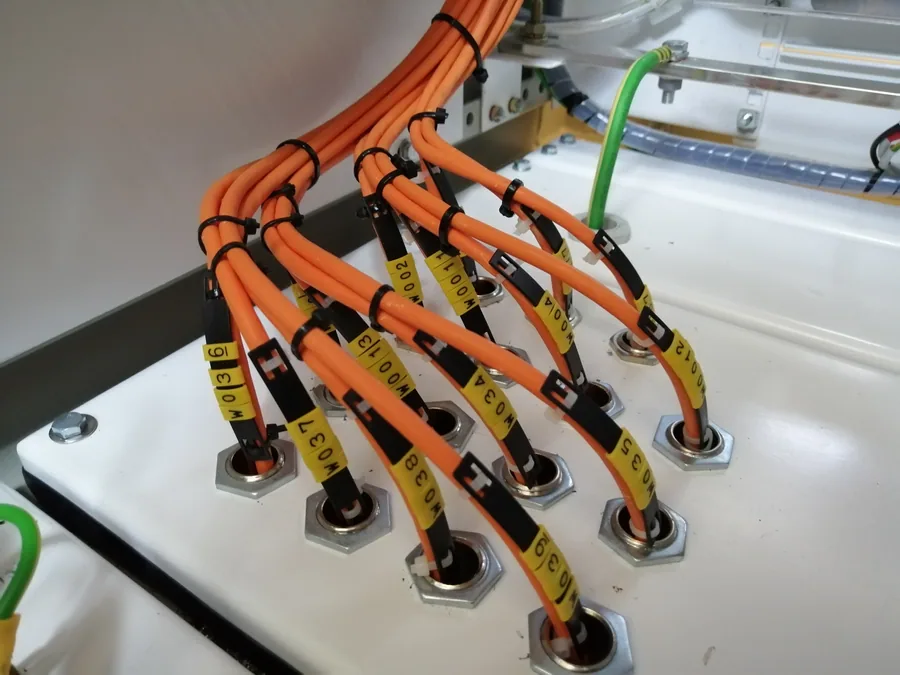
Upgrading and replacement of GE SCMS, TAQA Transmission
TAQA - Transmission
Date2022-01-16
CategoryAutomation, Panel Building
Guide
SCADA stands for Supervisory Control And Data Acquisition. The name is accurate but backwards: the data acquisition comes first, and the supervision is the point.
The definition
SCADA is the full form of Supervisory Control And Data Acquisition. It is the layer of a control system that lets a small number of people see and operate a large amount of plant from one place: a control room watching a whole electrical network, a municipality watching every irrigation pump station it owns, an operator watching a pipeline that has no staff along its route.
The word supervisory is doing the work in that sentence. SCADA does not usually run the plant directly. The fast decisions, opening a breaker on a fault, holding a pump's speed against a level, happen locally in controllers wired to the equipment. SCADA sits above them: it gathers their data, draws it on screens people can read, raises alarms when something needs a human, records history so questions can be answered later, and passes operator commands back down.
That split matters in practice. When a communications link drops, a well designed system keeps running locally and fills in its records when the link returns. On the municipal pump stations we build, the controller holds its data through the outage so the record has no gap once it recovers. A station that goes quiet has not stopped working; it has stopped reporting, and the design treats those as different problems.
The parts
Instruments measure the process, and PLCs or RTUs act on it locally. The RTU earns its keep on remote and distributed assets: on the Jabal Mibrih potable water pipeline the stations run unmanned, with the RTU holding the site's data and speaking for it.
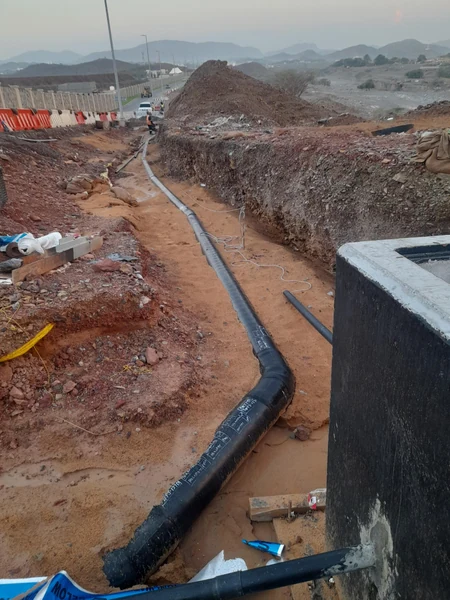
The part that decides more projects than any other. Fibre where the asset justifies it, 17.6 km of it laid and spliced along that same pipeline, GSM telemetry on scattered park pump stations, and protocols such as DNP3 and IEC 60870-5-104 up to the control centre.
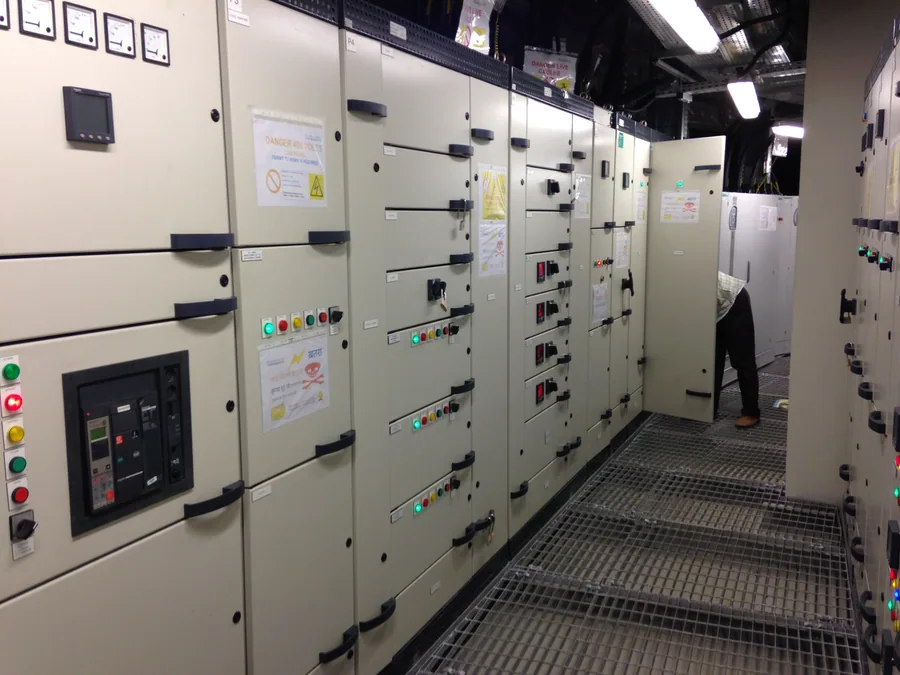
The supervisory core: real time data, alarm handling and history. At Al Bahr Towers the energy monitoring SCADA runs three redundant servers carrying roughly 50,000 tags, because the record is the product.
HMIs and control room workstations where the system meets a human. The screens follow the operator's existing conventions, because a station that reads differently from every other station on the wall creates hesitation at exactly the wrong moment.
In practice
Real systems
The examples in this guide are delivered projects, documented with client, scope and equipment.
TAQA - Transmission
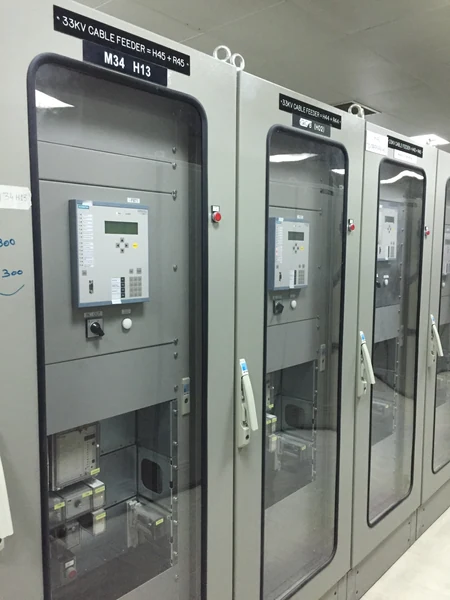
TAQA Transmission
Ministry of Energy & Infrastructure
ABU DHABI INVESMENT COUNCIL
Common questions
Supervisory Control And Data Acquisition. Data acquisition is the gathering of measurements and states from plant in the field; supervisory control is a human, or logic acting for one, watching that data and sending commands back.
Both, as a system. The supervisory layer is software, platforms such as PcVue, GE iFIX and CIMPLICITY, and Hitachi Energy MicroSCADA among those we work on, running on servers and workstations. Below it sit hardware: RTUs, PLCs, communications equipment and the instruments themselves. Buying the software without engineering the rest is how projects fail.
A PLC controls a machine or a station directly and fast, in milliseconds. SCADA supervises many PLCs and RTUs from above: slower, wider, and built for people. They are layers of one system, not competitors. Our guide on PLC, RTU or SCADA covers how to decide what your project actually needs.
A DCS, a distributed control system, is built as one product to run a single large continuous plant, typically with the control and the operator layer from one vendor and the loops tuned as a whole. SCADA is assembled from parts and shines where the plant is spread out: networks, pipelines, many small stations. On utility and infrastructure work in the UAE, SCADA is usually the right shape.
Around us: electrical transmission and distribution, water and wastewater, irrigation networks, oil and gas, district cooling and large buildings. Anywhere plant is spread across sites and a small team has to supervise all of it.
Both, deliberately separated. Routine control runs locally; the supervisory layer monitors everything and carries operator commands, a pump started remotely, a setpoint changed, a breaker opened, with the local controller enforcing the interlocks that keep the command safe.
It depends on the number of sites, the communications between them, the controllers at each one, and the integration at the control centre, which is why we quote against a scope rather than publish figures. Our automation cost guide explains the drivers.
Related
Tell us about the system you need built, upgraded or kept running.