
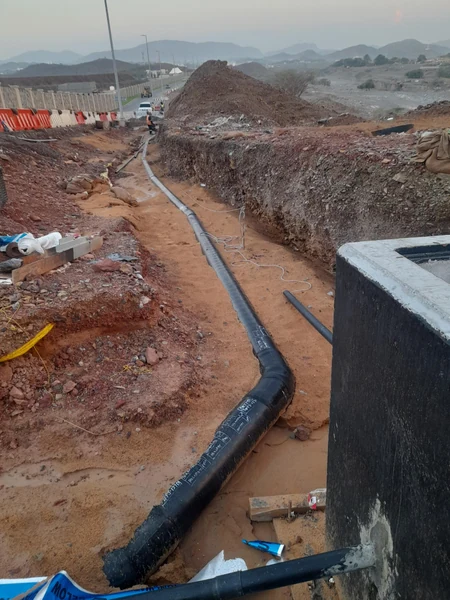
SCADA System For Potable Water Pipeline Jabal Mibrih Road
Ministry of Energy & Infrastructure
Date2023-10-16
CategoryAutomation, MEP, Civil Engineering
Plain answer
If a supplier has told you that you need a SCADA system and you are not sure what one is, this page is for you.
The short version
These three words describe different jobs, and the confusion is understandable because the same supplier often sells all three and the boundaries have blurred as the equipment has got cheaper.
The simplest way to hold them apart: a PLC decides what the plant does. An RTU gathers data from a place nobody visits and sends it somewhere. SCADA is the screen a person watches and the system behind it. A plant can have all three, any two, or just the first.
You do not need to know which one you want in order to have a useful conversation with a contractor. You need to be able to describe what you want to happen, and what you want to know. The right equipment follows from that, and anyone who cannot explain their recommendation in those terms is worth being careful with.
Definitions
In plain terms, with the thing each one is actually for.
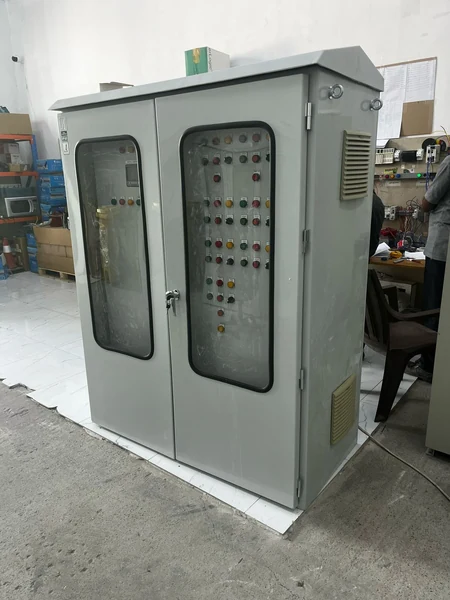
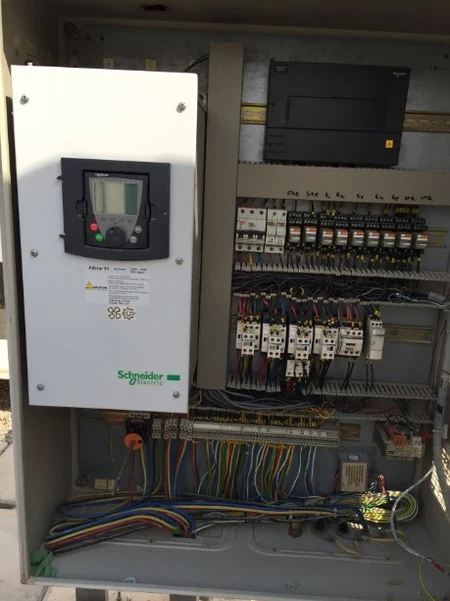
A small industrial computer that reads inputs and switches outputs according to logic somebody wrote. It is what decides that a pump should start, a valve should open, or that something should stop because a pressure is too high. It sits in a panel and it keeps working when nobody is watching.
Built for the far end of a network: a chamber, a kiosk, a wellhead. It reads instruments, stores the readings when it cannot send them, and transmits when it can. It is designed for the environment and the isolation rather than for heavy control. Many can also do simple control.
The screen on the panel door. It shows the state of the equipment in front of you and lets an operator standing there change something. Local only. Cheap, and often all a single station needs.
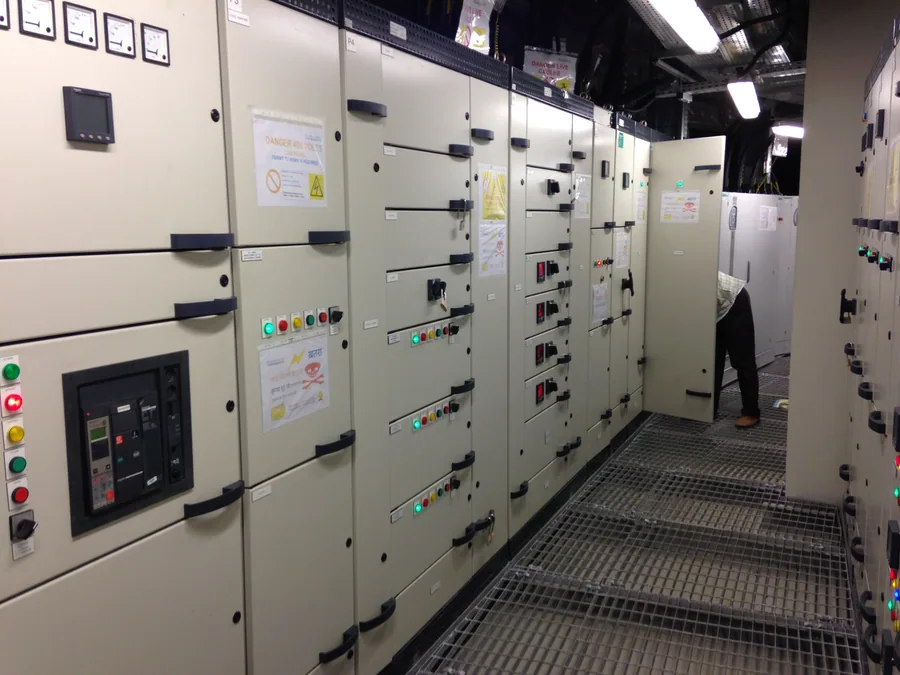
The system in an office or control room that collects from many controllers and RTUs, shows the whole plant or network, raises alarms, records history and lets an operator intervene from a distance. This is the expensive one, and it earns its cost when you have several sites or a team who cannot be everywhere.
A different architecture used mainly in continuous process industries such as oil, gas and petrochemicals, where control and supervision are integrated in one product. If you are automating a pump station or a building you almost certainly do not need one.
Deciding
Track record
A pipeline that needed RTUs and a long communication route, district irrigation that needed both PLCs and RTUs, and a network that needed full SCADA.
Ministry of Energy & Infrastructure
Department of Municipalities & Transport, Abu Dhabi (DMT)
ABU DHABI INVESMENT COUNCIL
Schlumberger Technical Services Inc.
Common questions
A PLC is built to control a process, normally in a plant room with reliable power and short cable runs. An RTU is built to sit at the far end of a network, gather data, store it when it cannot transmit, and survive the environment it is in. Modern devices blur the line, and plenty of installations use one where the other would have been the better choice.
Only if somebody needs to see or control the plant from somewhere else. A PLC will run the process perfectly well on its own. SCADA is bought to save people travelling, to catch problems earlier, and to keep a record. If one person walks past the panel every day and that is enough, it may not be worth it.
They do similar jobs with different vocabularies. SCADA is the term used for industrial plant, utilities, water and power. BMS, building management system, is the term used for the same idea applied to a building's air conditioning, lighting and services. Some products are sold as both.
Yes, and it is often the sensible order. The important thing is to say so at the start, so the controller is specified with a spare communication port and the tag naming is done properly. Retrofitting a communication path to a controller chosen without one in mind is where the cost appears.
You should, with advice. Describe what you want to happen automatically and what you want to be able to see, and require the contractor to justify the equipment against that rather than the other way round. A recommendation that cannot be explained in those terms is usually a recommendation about what the supplier sells.
Related
Tell us about the system you need built, upgraded or kept running.