
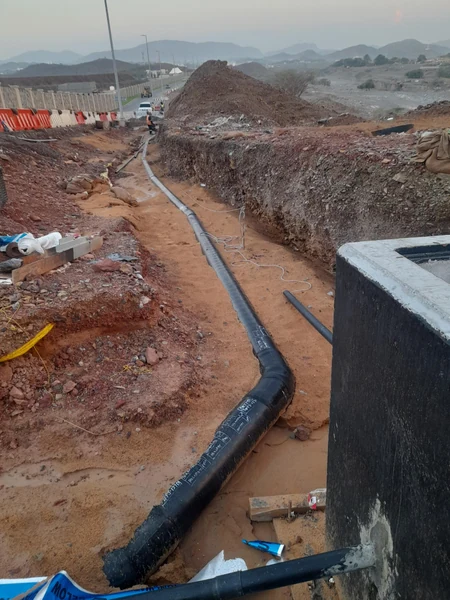
SCADA System For Potable Water Pipeline Jabal Mibrih Road
Ministry of Energy & Infrastructure
Date2023-10-16
CategoryAutomation, MEP, Civil Engineering
Guide
An RTU sits in a roadside chamber for fifteen years, in this heat, on whatever power and signal the location gave it. That is the specification that matters.
The difference
The two overlap enough that people use the words interchangeably, and on a datasheet they can look similar. The distinction that matters in the field is what each is built to survive and what it is built to do when it is alone.
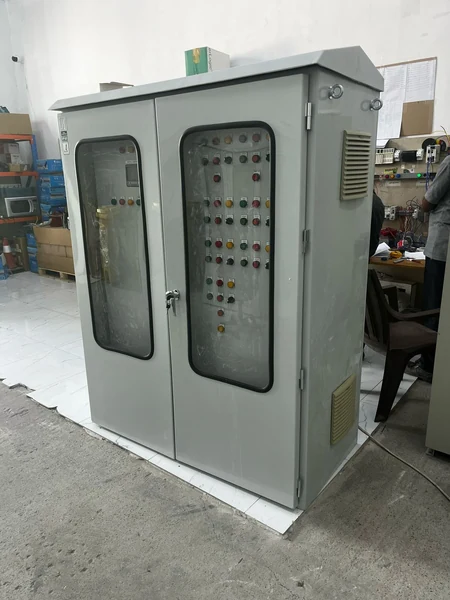
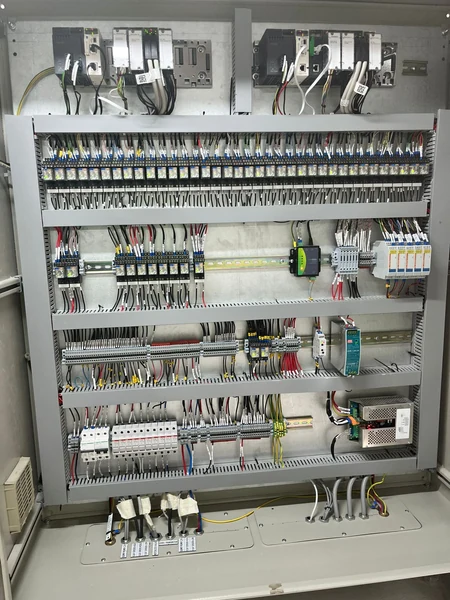
A PLC is designed to control a process, usually inside a plant room, usually with reliable power and a short cable run to whatever it talks to. An RTU is designed to sit at the far end of a network, in a chamber or a kiosk, gather data from whatever instruments are there, keep it when it cannot send it, and carry on doing so through heat, dust and an unstable supply.
On a potable water pipeline for the Department of Municipalities and Transport we laid seventeen kilometres of fibre optic cable along the route before any of the RTU data could be proved end to end. That ratio, a long communications job wrapped around a small controller job, is normal for telemetry and is the part most often underestimated.
Selection
Function is rarely the constraint. Environment and access almost always are.
An enclosure in direct sun in Abu Dhabi will run far above ambient. Standard temperature ratings that are fine in Europe are not automatically fine here, and a unit that spends every summer near its limit will not reach its design life.
Many field sites have limited or intermittent supply. Battery backup sizing, charge management and what the unit does on a brownout rather than a clean outage all belong in the specification, because brownouts are more common than blackouts.
Chambers flood, fill with sand, and get landscaped over. Rating against the real installed condition matters, and so does whether an engineer can reach the unit for calibration once the site is finished.
The unit must log locally and backfill when communication returns, or your consumption record has holes exactly when the network was misbehaving and you most wanted the data.
Scope
Track record
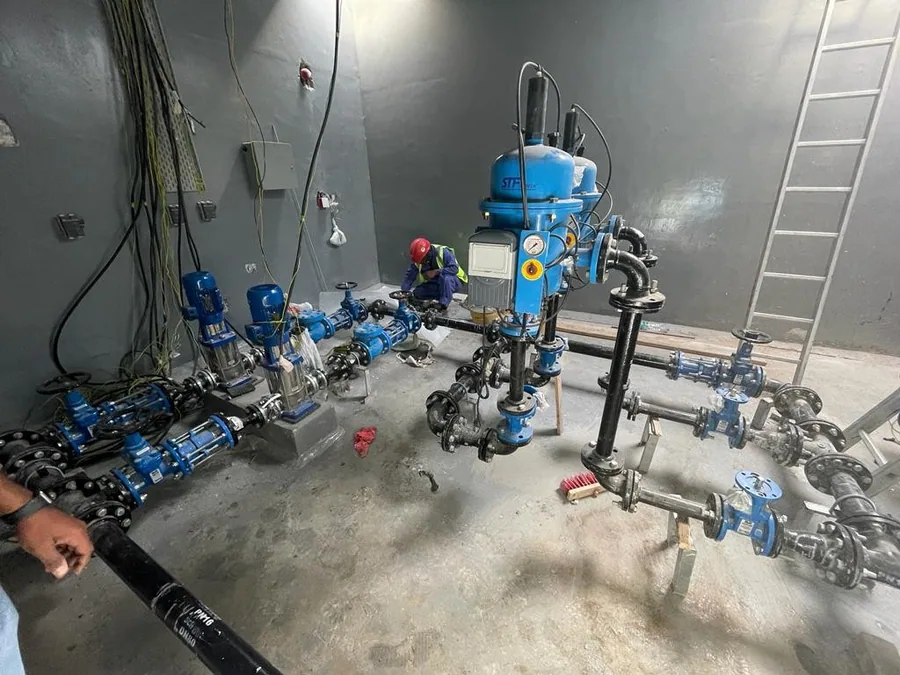
A potable water pipeline, district irrigation with PLCs and RTUs, city park pumping and a sports venue.
Ministry of Energy & Infrastructure
Department of Municipalities & Transport, Abu Dhabi (DMT)
Department of Municipalities & Transport, Abu Dhabi (DMT)
MFour Building Contracting LLC (end user: Abu Dhabi Sports Council)
Protocols
Protocol choice is usually dictated by the existing control room. Being fluent in several is what makes an integration possible at all.
Common questions
A PLC controls a process, normally in a plant room with reliable power and short cable runs. An RTU sits at the far end of a network, gathers data from field instruments, stores it when it cannot transmit and is built for the environment it sits in. Many modern devices blur the line, and plenty of installations use one where the other would have been the better choice.
Fibre where the route allows and the distance justifies it, cellular where coverage is dependable and the data volume is small, licensed radio where neither works. On the Jabal Mibrih pipeline the answer was seventeen kilometres of fibre laid along the route, because nothing else was going to be reliable enough for the asset.
Yes, and it is common. The work is mostly in the protocol mapping and the point schedule rather than in the hardware, and the first step is always establishing what the existing system really expects rather than what its documentation says.
Well specified and properly enclosed, ten to fifteen years is reasonable. Units that fail early usually fail for environmental reasons rather than electronic ones: thermal stress, water ingress, or a supply that was never as clean as the design assumed.
Related
Tell us about the system you need built, upgraded or kept running.