
Design and Construction of 67 Parks and Playgrounds in Various Areas in the City of Abu Dhabi CP11
Department of Municipalities & Transport, Abu Dhabi (DMT)
Date2025-08-03
CategoryAutomation, MEP, Panel Building
Guide
Parks and pipelines are spread across tens of kilometres, the communication link drops, and the water still has to arrive. That is the whole design problem.
The design constraint
An irrigation or pumping network in this region is not one site. It is a pumping station, a set of remote chambers, valve positions and level instruments scattered across a district, joined by whatever communication path the route allowed. Some of those links will be unavailable at some point, and it will not be at a convenient time.
So the question that separates a workable design from a fragile one is what happens during that outage. If the controller at the station needs a healthy link to the control room to decide whether to run a pump, the network stops when the link does. If the controller runs the process correctly on its own and buffers data until the link returns, an outage becomes a reporting gap rather than an operational event.
Almafor has delivered irrigation and pumping automation across parks, city districts and a potable water pipeline for the Department of Municipalities and Transport, Abu Dhabi Municipality, ADNEC and the Abu Dhabi Sports Council. The pattern above is drawn from those, not from a textbook.
Components
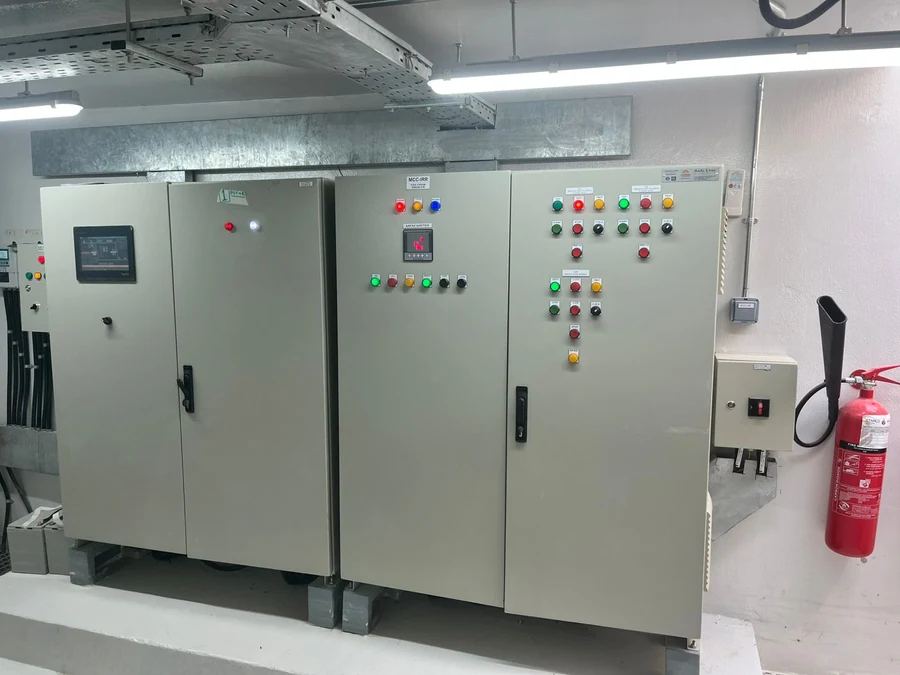
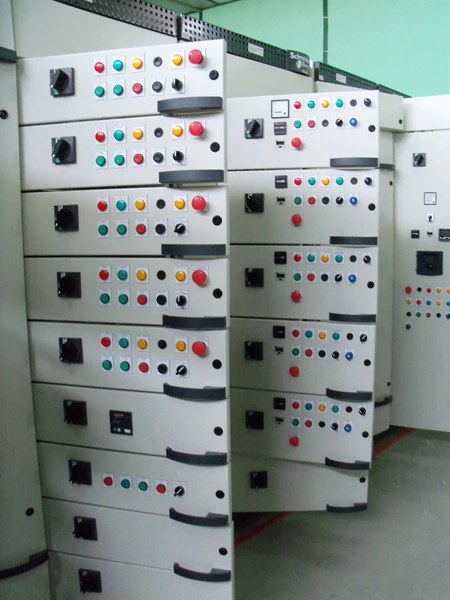
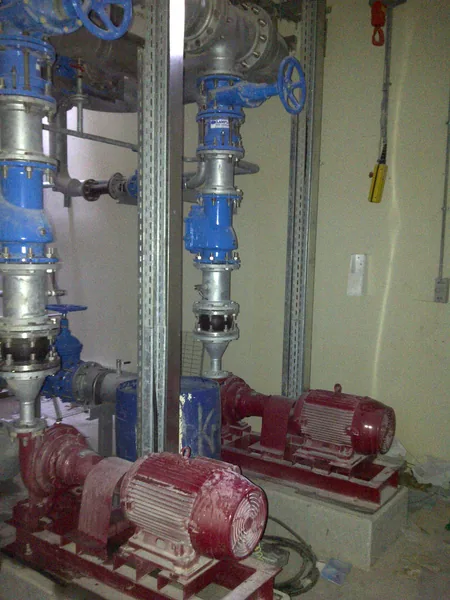
Pumps, motors, starters or variable frequency drives, the motor control centre, and the instrumentation around the manifold: pressure, flow and level. This is where most of the electrical scope and most of the energy sits.
RTUs at valve chambers and metering points, often with local power constraints and no shelter beyond the chamber itself. Selection here is driven by environment and access as much as by function.
Fibre where a route was available, radio or cellular where it was not. On one potable water pipeline the automation could not be proved until seventeen kilometres of fibre had been laid along the route.
The head end that shows the district, raises alarms and records consumption. Useful, and the layer most people picture when they say automation, but the least important of the four when something goes wrong at night.
Specification
Track record
Parks and playgrounds across Abu Dhabi and Al Ain, city district irrigation, an exhibition centre and a cycling venue.
Department of Municipalities & Transport, Abu Dhabi (DMT)
Department of Municipalities & Transport, Abu Dhabi (DMT)
Abu Dhabi Municipality
Abu Dhabi National Exhibitions Company ADNEC
Delivery
Chamber locations, power availability, communication line of sight and where the civil works will actually be permitted. Assumptions made from a drawing get expensive once trenching starts.
Agree what each station does alone before designing what it does when connected. Doing it the other way round produces schemes that only work on a good day.
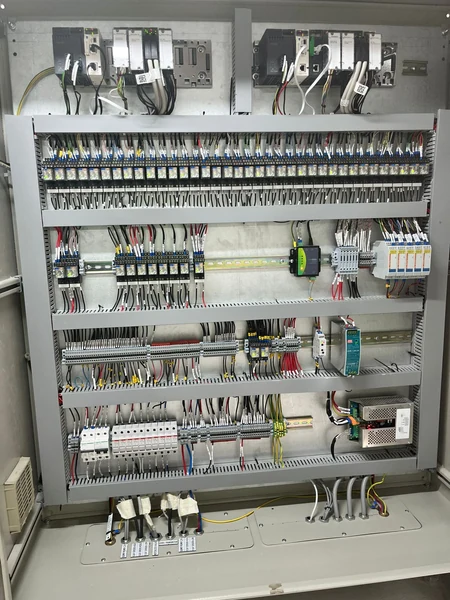
Motor control centres, VFD panels and RTU cabinets configured, powered and function tested before they go anywhere near a chamber.
Each station proved standalone, then proved again with the link up. Irrigation networks are commissioned in a live landscape, so sequencing matters.
Watch a complete irrigation cycle, not a demonstration. Schedules, rotation and alarms behave differently over a real cycle than over a witness test.
Common questions
Typically the pumps and their drives, the pressure in the network, valve zones and their schedules, and the metering that records what was used. On municipal work it also has to report upward, so the district can be seen as a whole rather than station by station.
A local controller is enough to keep the water moving. SCADA is what lets a small team look after a whole district without driving to each station, and what gives you the consumption record. On networks of any size the driver is usually manpower rather than control.
On a design we have done, the station keeps running its schedule and protections locally and buffers data until the link returns. If a scheme requires the link to be healthy in order to irrigate, that is a design decision somebody made, and it is worth finding out at tender stage rather than in July.
We do the controls, the panels, the drives, the instrumentation and the electrical and civil works around them, and we work alongside whoever supplies the pumps. On the 6.6 kV pump station covered in our insights we replaced the drive and the motor together, because replacing one without the other would have bought two years and another shutdown.
Related
Tell us about the system you need built, upgraded or kept running.