
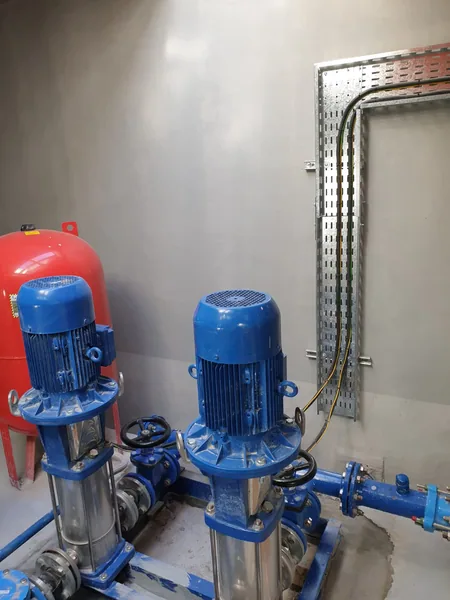
Pump control panels with RTU and SCADA integration, 12 irrigation pump sets
Department of Municipalities and Transport, Abu Dhabi (DMT)
Date2025-01-10
CategoryAutomation, Panel Building
Guide
A control system is only as honest as its instruments. Everything the operator sees, every alarm, every trend, every automatic decision, starts as a measurement made by a device somebody selected, installed and proved.
The discipline
Instrumentation is the layer between the physical process and the control system: the transmitters that measure level, pressure and flow, the switches that trip when a limit is crossed, the actuated valves that move on command, and the cabling, glanding and termination that carries every one of those signals back to a panel. In the UAE the term covers supply, installation, termination, loop checking and commissioning, and the companies that do it well treat those as one job rather than five.
The reason it is a discipline rather than a purchasing exercise is that instruments fail in believable ways. A drifted level transmitter does not announce itself; it quietly feeds the control system a number that is wrong. Good instrumentation design assumes this, which is why a properly specified pump station carries float or conductivity switches behind the analogue measurement as an independent backup, so the pumps still start when the transmitter lies.
Almafor delivers instrumentation as part of its control and automation scope across Abu Dhabi and the UAE: pumping stations, pipelines, reservoirs, irrigation and fire hydrant pump rooms, substations and buildings. Our trade licence covers the installation and maintenance of equipment, instrumentation and control, and the projects on this page each carry a documented instrument list.
The kit
Hydrostatic and conductivity level measurement, level switches, floats, anti-flood sensors, pressure transmitters, gauges and switches. On a recent stormwater lifting station a hydrostatic sensor carries the control duty with four float switches behind it as discrete backup.
Electromagnetic flow meters and flow totalisation on irrigation mains, potable water lines and reservoir pumping stations, wired for both local indication and the SCADA record.
Motorised valves on irrigation and water networks with position feedback into the controller, valve and damper actuators on building services, proximity switches, and interfacing to pump manufacturers' own protection modules so the station reports why it stopped.
Power and energy metering at scale: roughly 700 ION, PM750 and PM1200 power meters at Al Bahr Towers alongside forty four power distribution units, power monitoring on MCC incomers, and combined energy and water metering delivered for Estidama compliance.
The instrumentation layer of substation work: integration with protection relays and instrument transformers, alarm annunciators, and GPS time synchronisation so every event across the station carries the same timestamp. Khalifa Port alone took 27 annunciators and 6 GPS units.
Instrument cabling, containment, glanding and termination, analogue signal splitters where one transmitter feeds both a PLC and an RTU, and battery-backed supplies so instruments keep reporting through a mains failure.
Before you appoint
Track record
Each of these carries a documented instrument scope: transmitters, switches, flow meters and the loop checking that proved them.
Department of Municipalities and Transport, Abu Dhabi (DMT)
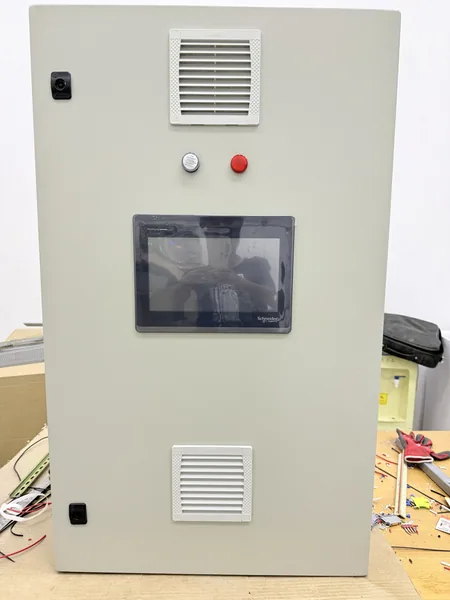
Department of Municipalities and Transport, Abu Dhabi (DMT)
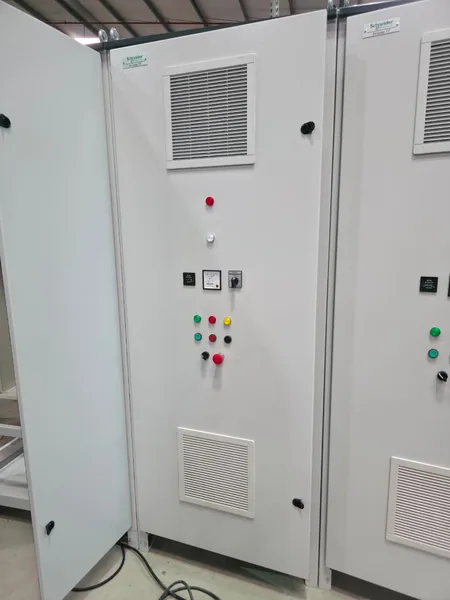
Al Hamra Zone 2 development, to Etihad Water and Electricity specifications
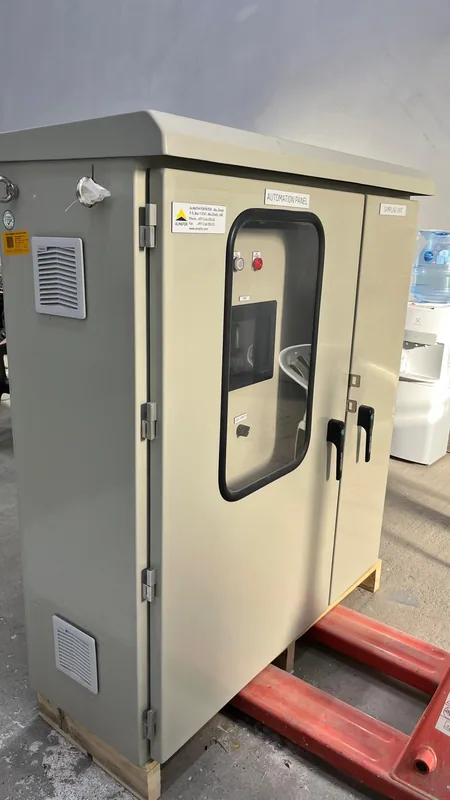
Bawabat Al Sharq Development
Common questions
It supplies, installs, terminates and commissions the measuring and actuating devices a control system depends on: level, pressure and flow instruments, switches, motorised valves, and the cabling that connects them. The commissioning part matters most: each signal is loop checked end to end so the number on the operator's screen provably matches what is happening in the pipe.
We are an Abu Dhabi company and most of our instrumentation work is delivered here, on municipal pumping stations, reservoirs, pipelines and buildings, with projects elsewhere in the UAE. Working to Abu Dhabi asset owners' approved manufacturer lists is a normal part of the job.
Because transmitters drift and fail quietly. A float or conductivity switch is a separate, simple device that still starts or protects the pumps when the analogue measurement is wrong. Municipal specifications in Abu Dhabi ask for exactly this arrangement, and it is the difference between a nuisance fault and a flooded station.
Proving each signal end to end at commissioning: stimulate the instrument, watch the value arrive correctly scaled at the controller and the SCADA, and record it. It is the only way to know that terminal 47 really is the level transmitter and not the pressure switch, and it is done before handover, not after the first wrong alarm.
Both, and that is the point. The instruments, the panel they land in, the PLC or RTU reading them and the SCADA reporting them are one signal chain. When one contractor owns the whole chain there is nobody to argue with about whose terminal the fault is on.
Yes. Much of our work is adding measurement to plant already in service: new transmitters and switches wired into an existing panel, strap-on temperature sensors and clamp-on ultrasonic flow meters where cutting pipe is not an option, an analogue splitter so an existing signal also reaches a new RTU, and telemetry so a previously silent site starts reporting. Our guide on adding remote monitoring to existing equipment covers how that is staged.
Related
Tell us about the system you need built, upgraded or kept running.