
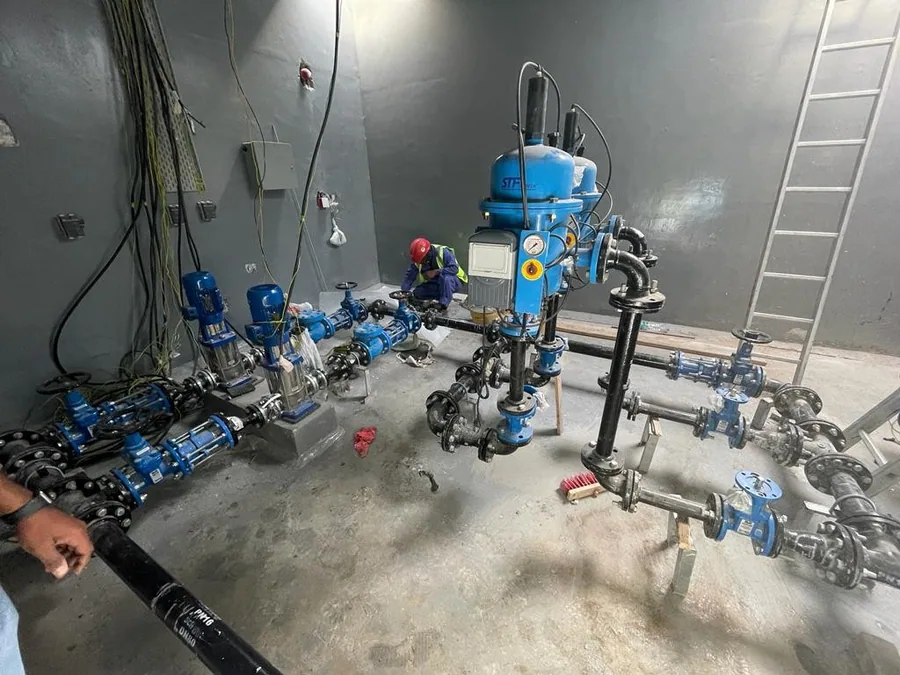
Hudariyat Cycling club Irrigation automation
MFour Building Contracting LLC (end user: Abu Dhabi Sports Council)
Date2022-03-07
CategoryAutomation, MEP, Panel Building
Plain answer
The reason nobody answers this question is not evasiveness. It is that the same three words can describe a job that differs by fifty times.
Why there is no number
People asking this question are usually expecting the answer to be driven by hardware, because hardware is the part with a catalogue price. On most of the contracts we deliver, the controllers, instruments and panels are a minority of the total.
The majority goes on labour and access: surveying what is there, getting a design approved, laying cable, doing civil work, getting an outage window, commissioning, and proving every signal from the field device to the screen. None of those appear on a datasheet.
That is also why two quotations for the same enquiry can differ by a factor of two without either being wrong. They are usually pricing different amounts of the work. The list below is what to compare so you can tell.
Cost drivers
If you can answer these, most contractors can price with reasonable confidence. If you cannot, expect a wide range and a lot of qualifications.
How many separate signals are measured or controlled. This is the single best predictor of cost across every discipline we work in, better than floor area, plant size or the size of the building. Two projects with the same description and different point counts are different projects.
Work on plant that stays in service costs materially more: it needs staged design, parallel running, outage windows, more commissioning trips and more documentation. It is also frequently a contract condition rather than a choice, and it is the most common reason a cheap tender was cheap.
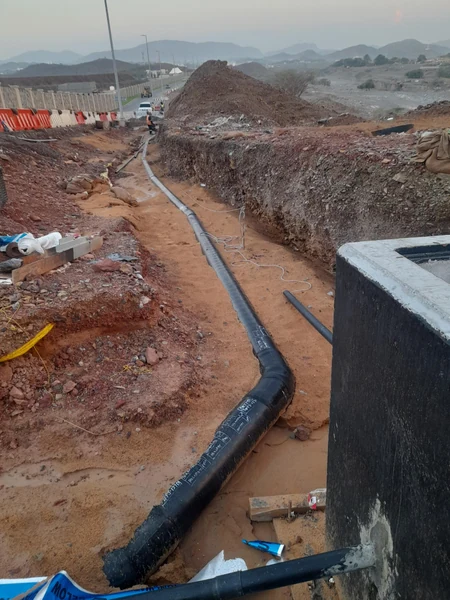
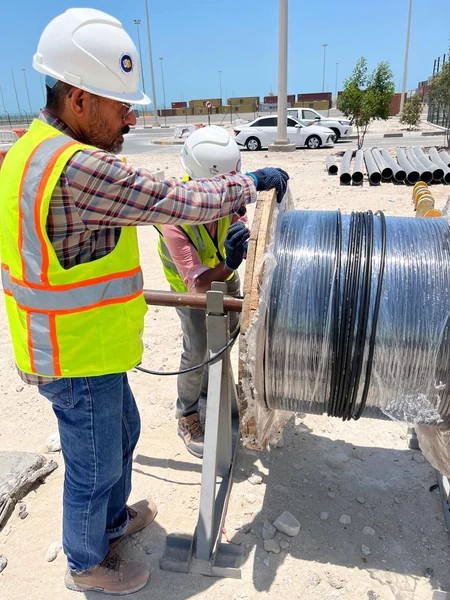
Distance is money. Seventeen kilometres of fibre along a pipeline route is trenching, ducts, chambers, permits, traffic management and reinstatement. On distributed networks this regularly exceeds the automation content.
Design approval with an asset owner such as TAQA or the Department of Municipalities and Transport takes time and engineering effort, and typically more than one review cycle. A contractor already on the relevant register carries less of this risk.
If drawings are accurate and the existing configuration is documented, pricing is straightforward. If nobody knows what is installed, a survey has to happen first, and a bid that does not include one has moved that risk to you rather than removed it.
Greenfield is simpler than integrating with equipment somebody else chose, whose protocol may be closed and whose logic may be undocumented. Retrofit carries discovery risk that greenfield does not.
As built documentation, commented source code, licences, spares and operator training are real work. They are also the first things trimmed to win a price, and their absence is invisible until the day you need them.
Comparing bids
Track record
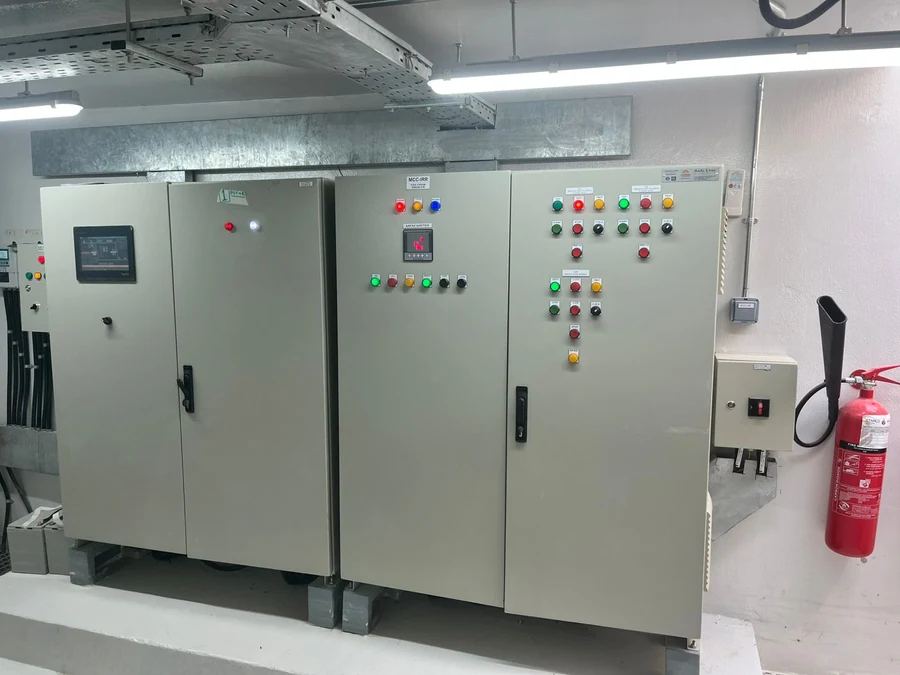
These four span most of the range: a single venue, a district of parks, a pipeline with a long communication route, and a multi substation control system.
MFour Building Contracting LLC (end user: Abu Dhabi Sports Council)
Department of Municipalities & Transport, Abu Dhabi (DMT)
Ministry of Energy & Infrastructure
Common questions
Because the same request can describe wildly different jobs. Automating a pump can mean a level switch or a station on a district SCADA with drives, telemetry and civil works. What can be done on a phone call is narrowing which of those you are describing, and that conversation is worth having before any site visit.
Solve one problem properly rather than everything partially. Usually that means protecting the equipment that would be most expensive to lose, or measuring the thing you currently have to guess at. A first phase that works builds the case for the second far better than a large scheme that stalls.
Not automatically, but it is a question. Compare the assumed point count, whether a survey is included, whether the plant is assumed available, and whether commissioning days are capped. In our experience the gap between two honest bids is usually explained by one of those four and not by margin.
Less than most people expect. On distributed work such as pipelines and irrigation networks the cabling and civil work alone can exceed the automation content. On substation work the commissioning and outage management can. Hardware is the part that is easy to compare, which is why bids get compared on it.
Yes, significantly. Staged design, parallel running, work inside agreed outage windows and repeated commissioning visits all add cost. It is worth stating this requirement in the enquiry rather than discovering at award that a bidder priced a shutdown you were never going to get.
Related
Tell us about the system you need built, upgraded or kept running.