
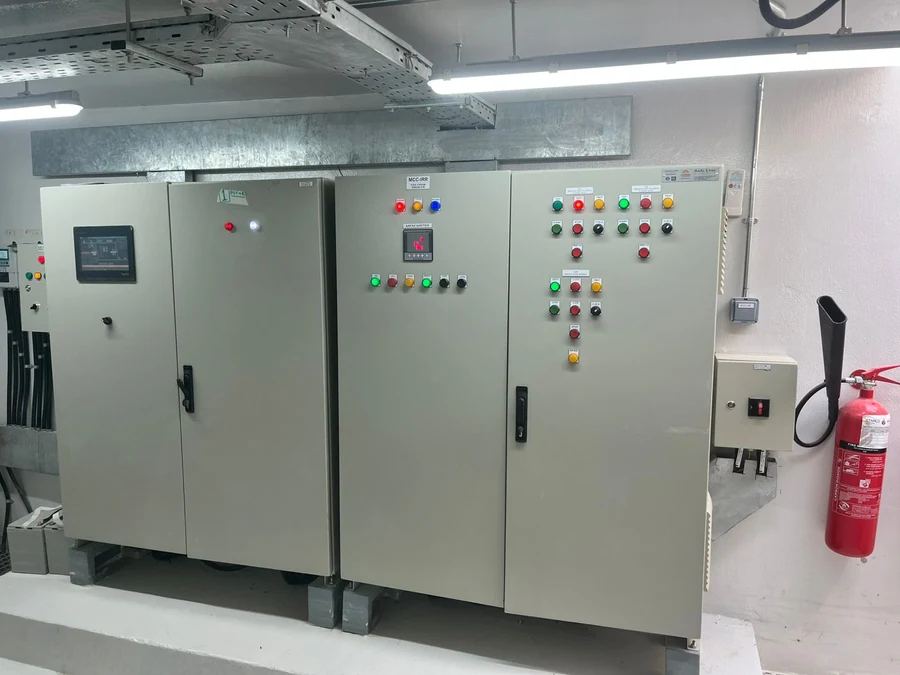
Design and Construction of 67 Parks and Playgrounds in Various Areas in the City of Abu Dhabi CP11
Department of Municipalities & Transport, Abu Dhabi (DMT)
Date2025-08-03
CategoryAutomation, MEP, Panel Building
Plain answer
Automating a pump is not one decision. It is five, and most people only need the first three.
The honest version
Automation on a pump is usually bought after something went wrong. A pump ran dry and burned out. A tank overflowed. Somebody drove out to a station to find nothing was wrong. A supply failed overnight and nobody knew until the morning.
Each of those has a different answer, and they cost very different amounts. Working out which one you are actually solving is worth doing before anybody quotes, because a specification written after a bad week tends to include everything.
The five levels below are cumulative. Most water and irrigation stations we work on sit at level three. Going further is justified by how far away the station is and how expensive an unnoticed failure would be, not by how modern the result looks.
The levels
Each level adds to the one before. Stop at the level that solves your problem.
A float switch or level probe in the tank starts and stops the pump. This is the oldest form of pump automation and it still solves most of the problem. It is cheap, it is reliable, and if this is all you need then adding a controller adds failure modes rather than removing them.
Dry run protection, low level cut out, over temperature, phase failure and overload. This is the level that stops you buying pumps. It is inexpensive relative to the equipment it protects and it is regularly missing on stations that have already destroyed a pump once.
A variable frequency drive holding a pressure setpoint instead of the pump running flat out and a valve throttling the excess, plus duty and standby rotation so both pumps wear evenly and a failure of one does not stop the station. This is where the energy saving is, and where most stations should end up.
An RTU or PLC with a communication path back to an office or control room, so somebody can see the station's state, its pressures and its alarms without driving there. This is bought when the station is remote or when there are several of them.
Multiple stations on a SCADA system, with schedules, consumption records and alarms handled centrally. This is worth it when you are managing a district rather than a station, which is how municipal irrigation and water networks are run.
What it involves
Track record
Municipal park pumping across Abu Dhabi and Al Ain, a district network, an exhibition centre and a sports venue.
Department of Municipalities & Transport, Abu Dhabi (DMT)
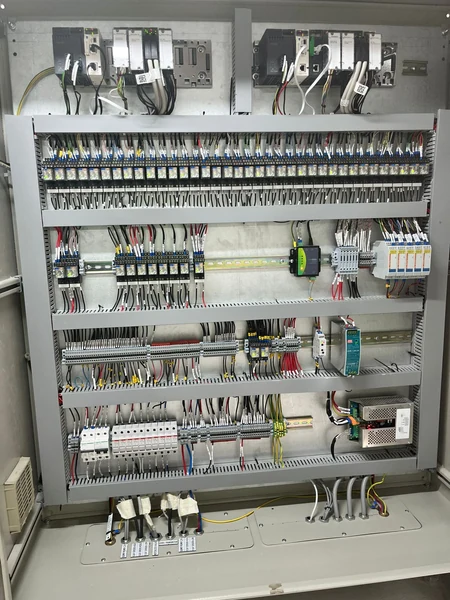
Department of Municipalities & Transport, Abu Dhabi (DMT)
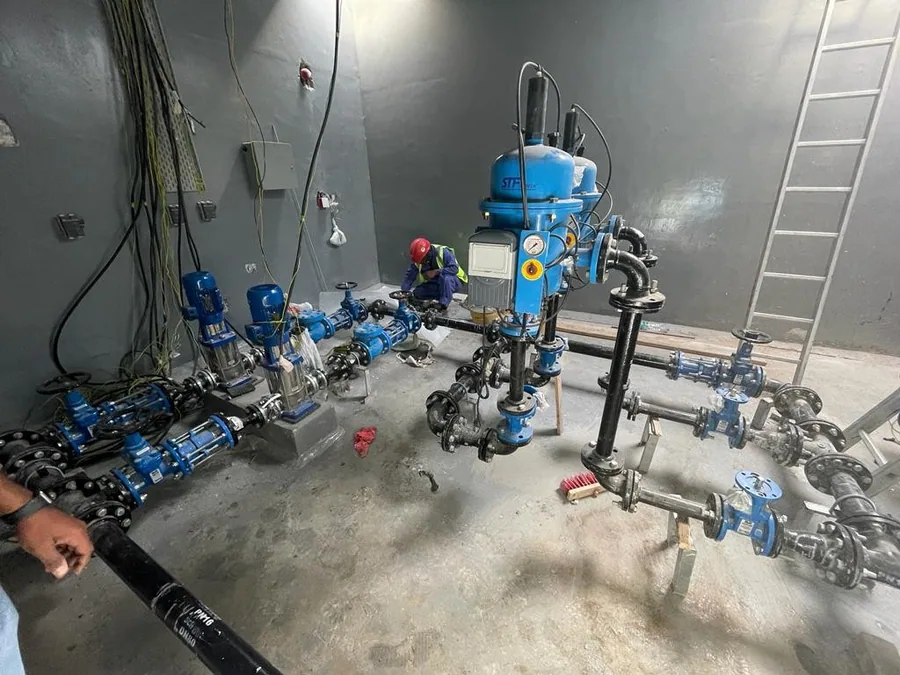
MFour Building Contracting LLC (end user: Abu Dhabi Sports Council)
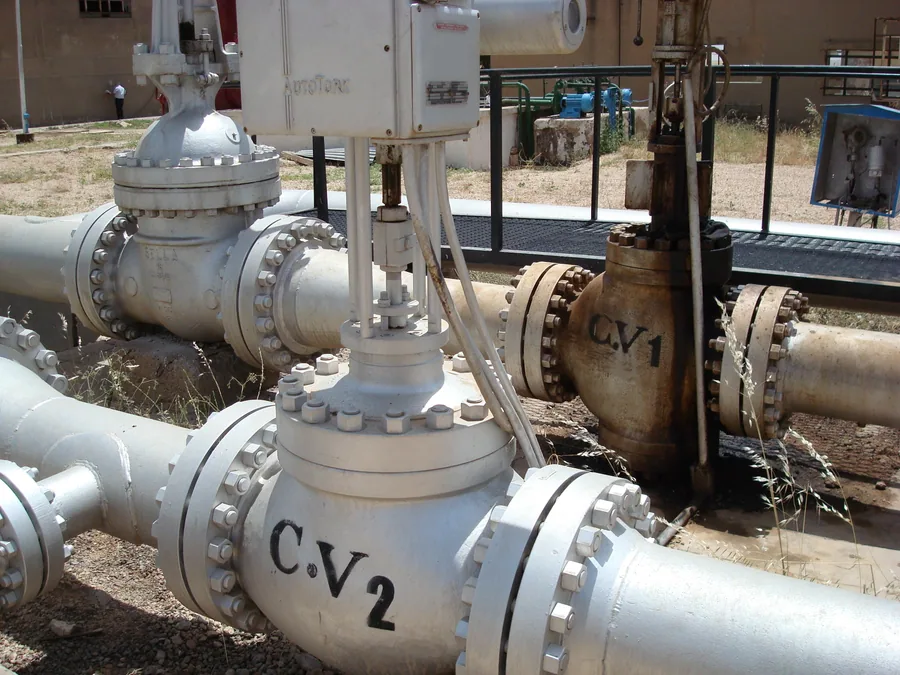
OIl and Gas Syria
Common questions
A level switch in the tank that starts the pump when the level drops and stops it when the tank is full, with a dry run cut out so the pump cannot run with no water. That is genuinely automation and it solves the majority of pump failures. Anything beyond it should be bought for a reason you can name.
Not for a single pump doing a simple job. A level switch and a properly specified starter will do it. A PLC starts to earn its place when you have more than one pump to sequence, a pressure to hold, a schedule to follow, or you want the station to report to somewhere else.
Usually yes, if the pump currently runs at full speed with a valve throttling the flow, because power drops sharply with speed. If the pump runs at full duty most of the time, or if it is oversized for reasons a drive cannot fix, the saving is smaller than the sales figure. Get the actual duty profile measured before assuming a payback.
You need three things: a controller at the station, a communication path back, and something at the other end to display it. The communication path is usually the hard part in remote locations. Design the station so it keeps running correctly when that link is down, otherwise you have made the station depend on the least reliable component.
It varies too widely for a useful single figure, because level one and level five differ by more than an order of magnitude. What is consistent is that the instrumentation and the panel are usually a small part of the cost, and the cabling, civil work and commissioning are usually a large one. Compare inclusions rather than totals.
Related
Tell us about the system you need built, upgraded or kept running.