
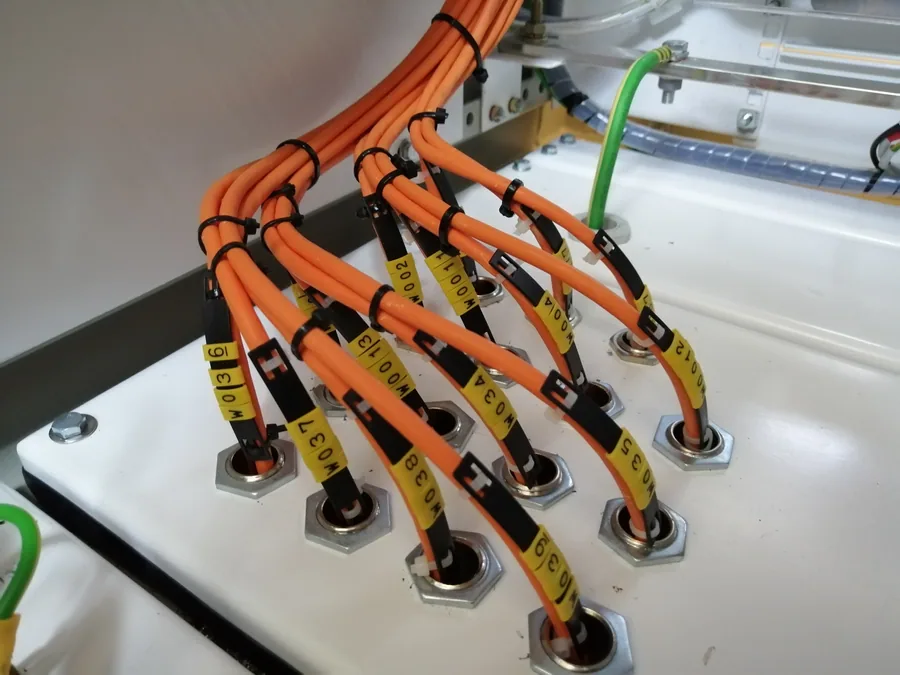
Upgrading and replacement of GE SCMS, TAQA Transmission
TAQA - Transmission
Date2022-01-16
CategoryAutomation, Panel Building
Guide
The system works. Support ended four years ago. Nobody wants to be the person who touches it. This is the position most upgrade decisions are made from.
The decision
A control system that has run without incident for twelve years is evidence that it was built well. It is not evidence that it is safe to keep. The risk on an obsolete system is not that it degrades gradually, it is that it runs perfectly until one component fails and there is no replacement, no patch and nobody left who knows the configuration.
That is why obsolescence decisions get postponed. Nothing is visibly wrong, the budget is large, and the change carries risk while doing nothing appears not to. The cost of doing nothing simply arrives later and all at once.
The honest framing is a question about spares and people rather than about version numbers. Can you buy a replacement for the part most likely to fail? Is there anyone who can reconfigure it? If both answers are no, the system is already a single point of failure whatever its uptime record says.
Triggers
Any one of these on its own is worth a plan. Two together usually means the decision has already been made for you.
The controller, the workstation or a specific card is no longer manufactured and the grey market is your supply chain. Check what a failure of the single most critical part would actually cost in downtime, then compare that with the upgrade.
SCADA nodes running an unsupported Windows version cannot be patched. On a system with any network exposure that is a security exposure, and on utility assets it increasingly fails audit.
The engineer who built it has gone, the source is undocumented or missing, and every change starts with reverse engineering. This is the most common trigger and the least often written down.
Point count near a licence limit, no capacity for the new bay or the new station, or reporting that has to be rebuilt by hand every month. Upgrading for capability is a better position to buy from than upgrading after a failure.
Options
Track record
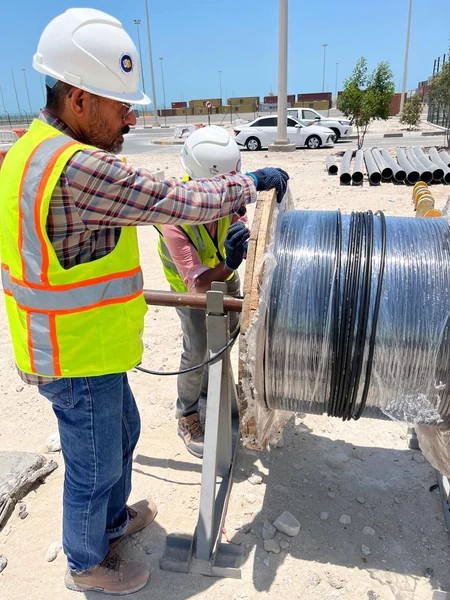
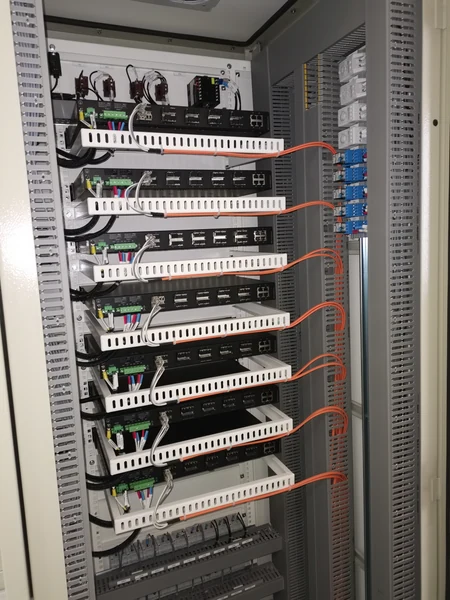
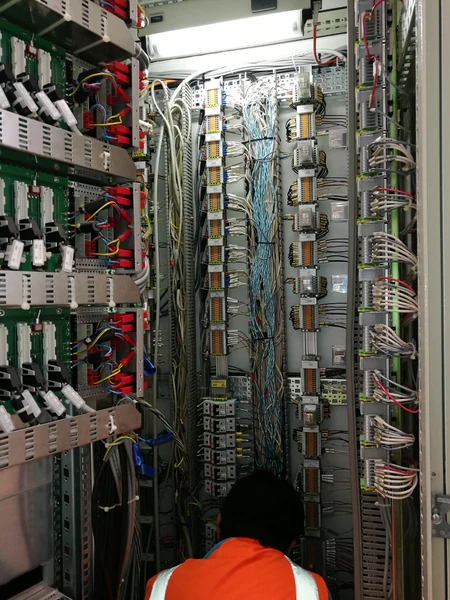
Every one of these was a replacement of somebody else's installed system, on plant that stayed operational.
TAQA - Transmission
TAQA Distribution
Method
A survey of installed hardware, firmware versions, configuration and every undocumented change made since commissioning. On systems of this age this is a deliverable in its own right and often the most valuable one.
Every signal with its source, address, scaling and alarm limit, reconciled against the plant rather than against the original documentation. This becomes the acceptance criteria for the new system.
Configured and tested in parallel, driven from simulated inputs, so it is proved before it is ever asked to control anything.
Bay by bay, feeder by feeder or station by station, with the old system available until each stage is proved. Nothing is decommissioned on the strength of a drawing.
The route back stays open until the new system has been through site acceptance and a period of normal operation, including a fault it had to handle.
Common questions
Because working and supported are different things. The question worth answering is what happens when the least replaceable component fails: whether a spare exists, whether anyone can reconfigure it, and how long the plant is down while you find out. If those answers are uncomfortable, the system is a single point of failure regardless of its uptime record.
Yes, and it is how we do most of this work. The new system is built and proved in parallel, then cut over in stages with the old one available until each stage is accepted. It takes longer than a full shutdown and it is usually the only option on utility and water assets.
Often not. A version migration on the same platform keeps the configuration, the graphics conventions and the operators' habits, and is considerably less disruptive. Platform change is warranted when the product line has ended or the architecture is the limitation, not simply because a newer product exists.
That is the normal condition rather than the exception. We start with a survey and rebuild the point schedule from the plant itself. It adds time at the front, and we price it separately rather than burying it, because pretending the documentation exists is how upgrade projects overrun.
Yes. We have upgraded and replaced GE based substation control systems for TAQA Transmission and delivered a new SCMS at Khalifa Port on Hitachi Energy hardware, in both cases replacing what was already installed.
Related
Tell us about the system you need built, upgraded or kept running.